• (216) 767-6323
  • office@juststumpit.com
  • OHIO

How insects living in tree stumps can damage property?
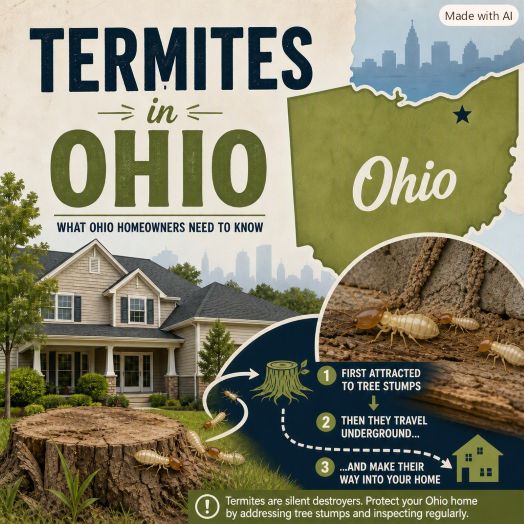
Insects living in tree stumps are dangerous to homeowners because they attract destructive pests like termites, ants, and beetles that can spread into homes, damage wooden structures, and create health risks.

Why Tree Stump Insects Are a Problem.

Termite Infestation.

Tree stumps provide the perfect environment for termites and other wood-boring insects. Once established, termites can migrate from the stump to nearby wooden structures, including decks, fences, and even the foundation of your home.

Ohio absolutely has termites, and in fact the state has active, established populations of wood‑destroying species.

Ohio absolutely has termites, and in fact the state has active, established populations of wood‑destroying species.

The key takeaway: Eastern subterranean termites are widespread across Ohio, including the Cleveland/Parma area, and they are the species responsible for nearly all structural termite damage in the state. Drywood termites are not native but can occasionally appear when transported inside infested furniture or crates.
Spread of Disease & Pests.

Decaying stumps can harbor fungi and bacteria that spread to healthy plants and trees. They also attract beetles and other insects that can damage landscaping and gardens. Read more about tree pests and diseases in our blog here.

These and other insects can use the stump for overwintering and laying eggs:

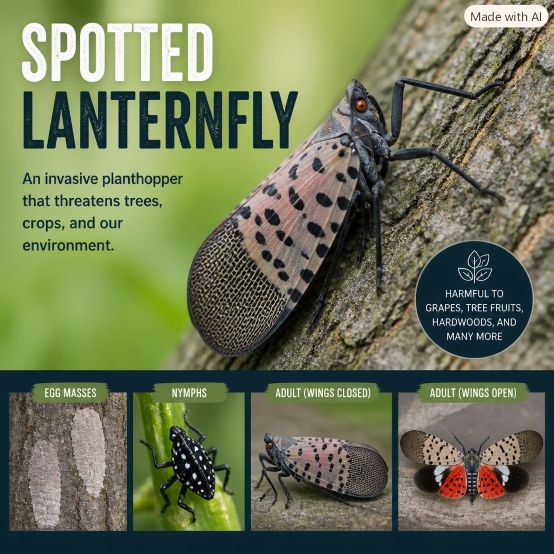
Last year’s red legged lanternfly outbreak in Cleveland caught many homeowners off guard. Entire neighborhoods saw trees dripping sap, covered in black sooty mold, and swarmed by insects. For some properties, the damage was so severe that trees became dangerous, unstable, and had to be removed before they collapsed.
The red legged lanternfly (also known as the spotted lanternfly) feeds by tapping directly into a tree’s sap. When hundreds or thousands gather on a single trunk, the stress adds up fast:
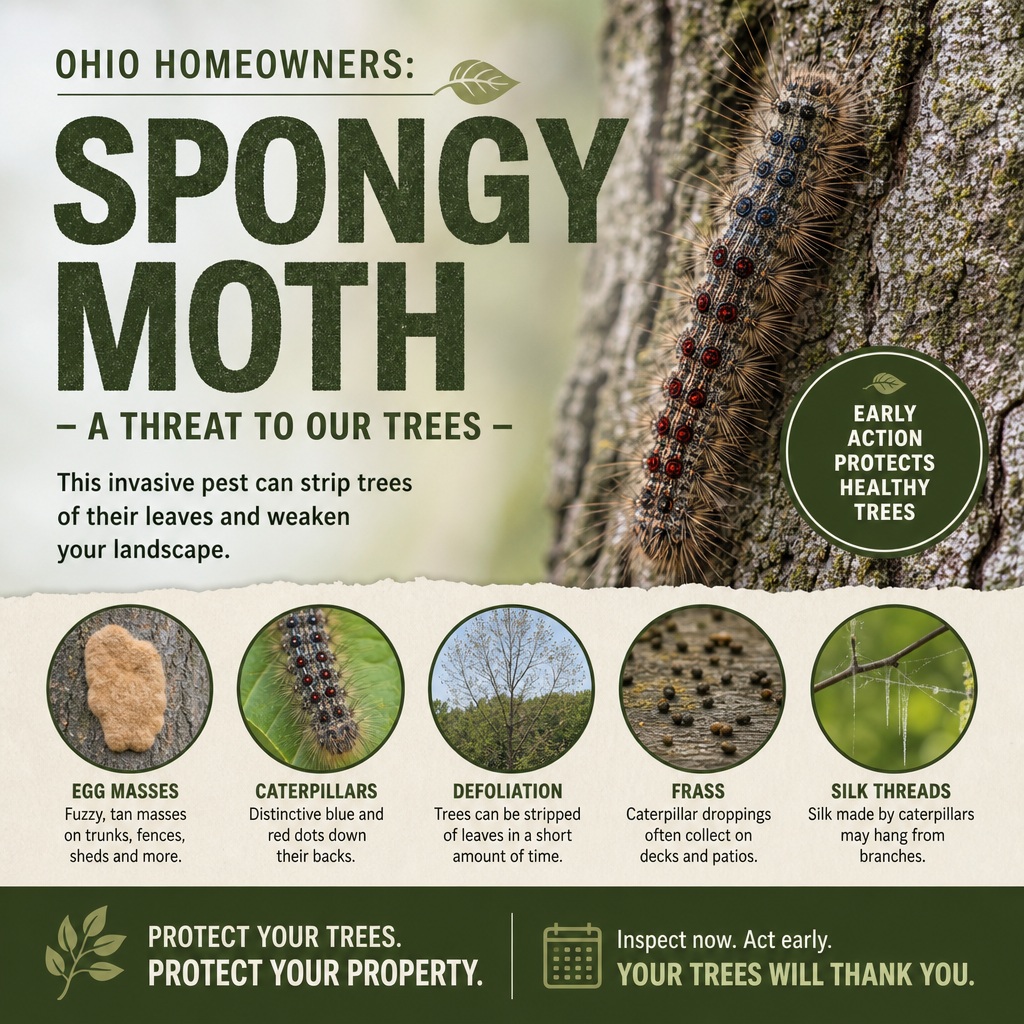
Spongy moth egg masses appear as fuzzy, yellowish-brown clusters on tree trunks, fences, sheds, and garden furniture. You may also notice their droppings accumulating on decks and patios.
The Brown Recluse: Why It Loves Stumps
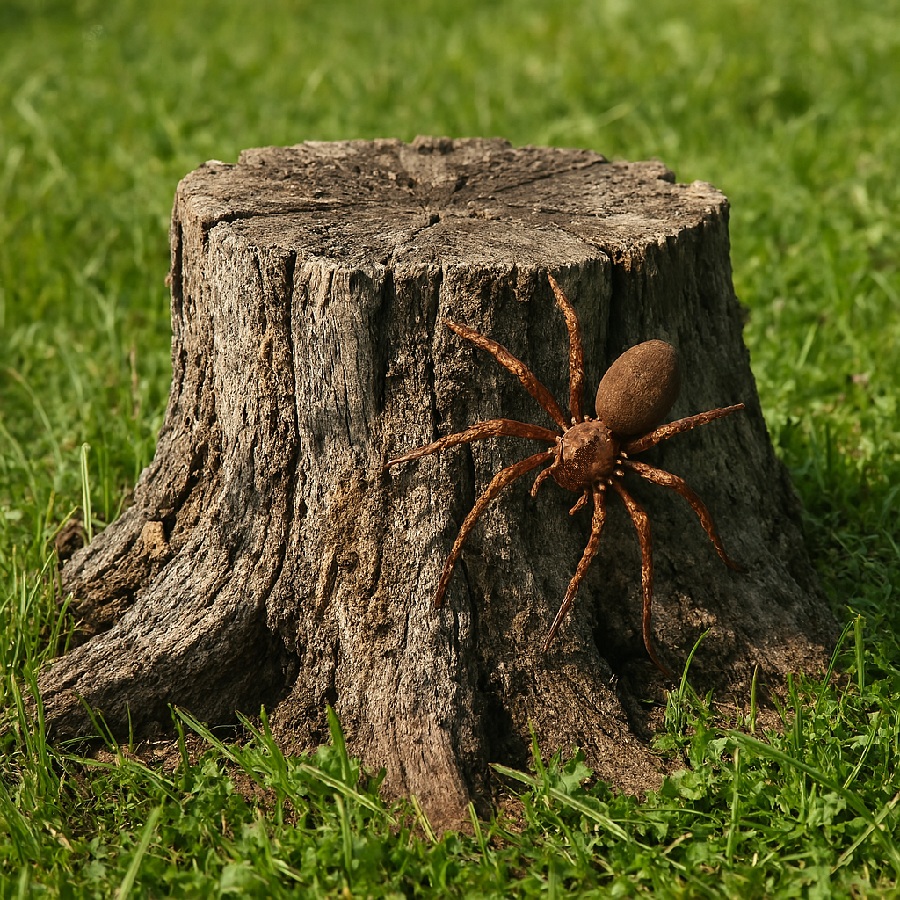
A tree stump—especially one that has begun to decay and hollow out—is ideal for the brown recluse spider. As insects multiply within the rotting wood, the recluse moves in to hunt for prey. The stump becomes a quiet, secluded breeding spot, often located just a few steps from a home's foundation.
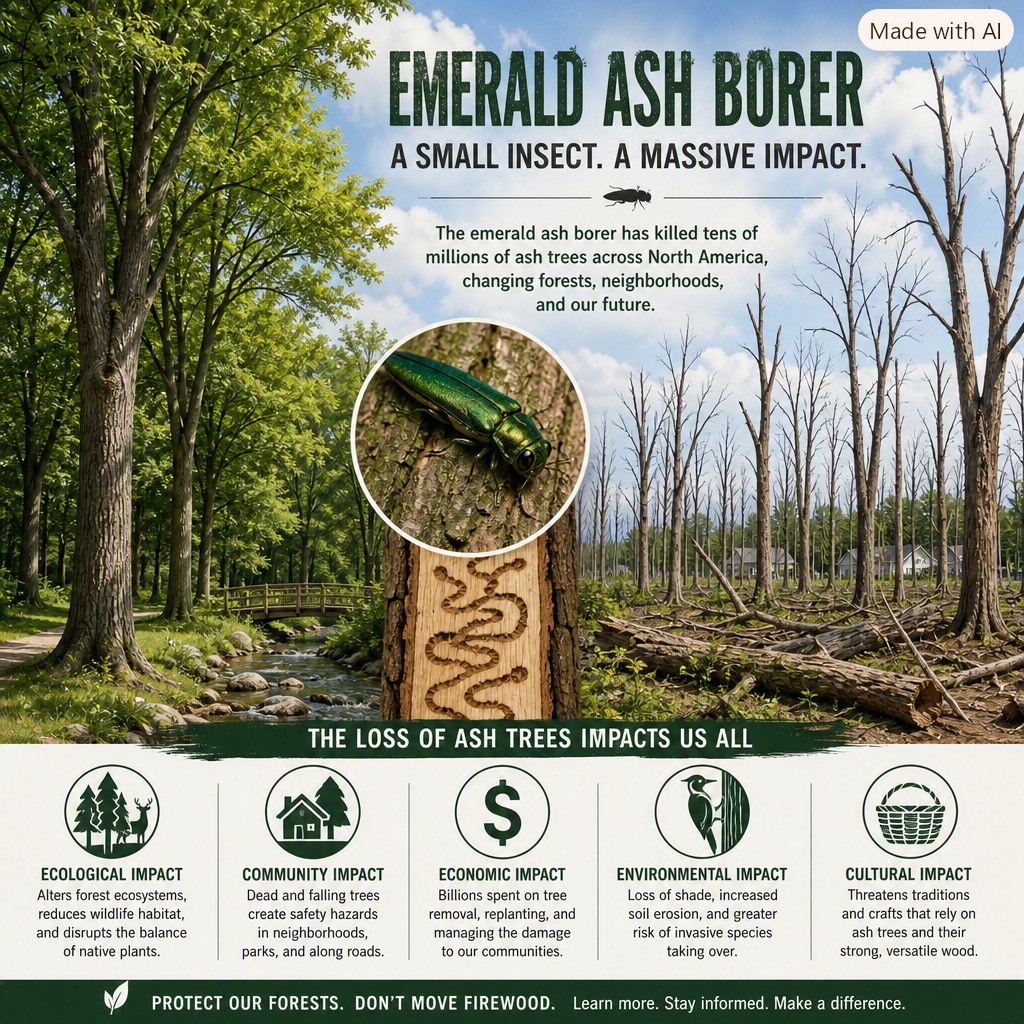
The ash borer beetle is a metallic-green wood‑boring insect native to East Asia. Adults are slender, about ½ inch long, with a bright emerald sheen and a copper‑red abdomen. Although the adults feed on ash leaves, the real damage comes from the larvae. After hatching, larvae burrow beneath the bark and feed on the tree’s phloem and outer sapwood, carving distinctive S‑shaped galleries that disrupt the tree’s ability to transport water and nutrients. This internal damage eventually girdles and kills the tree. Signs of Infestation: Ash trees often decline slowly, making early detection difficult. Key symptoms include: Dead branches near the top of the tree. Vertical bark cracks. Excessive sprouting along the trunk. D‑shaped exit holes left by emerging adults. S‑shaped larval tunnels beneath the bark. Increased woodpecker activity, as they feed on larvae beneath the bark.
The ash borer beetle is a metallic-green wood‑boring insect native to East Asia. Although the adults feed on ash leaves, the real damage comes from the larvae.

Gateway for Infestation.

⚠️ Risks to Homeowners:

What Homeowners Should Do.

Remove stumps promptly after tree removal to eliminate the pest habitat. Stump grinding is often the most effective method to prevent infestations. Maintain cleanliness around stump areas to reduce attraction for insects. Professional pest control may be necessary if termites or carpenter ants are already present.
In short, leaving a tree stump behind is like leaving an open invitation for pests to invade your yard and home. Removing or treating stumps quickly is the best way to protect your property.
0 0 votes
Article Rating
Subscribe
Notify of
guest

0 Comments
Oldest
Newest Most Voted
Translate »
0
Would love your thoughts, please comment.x
()
x