• (216) 767-6323
  • office@juststumpit.com
  • OHIO

A Comparison of Biodrainage with Other Site Drainage Solutions.
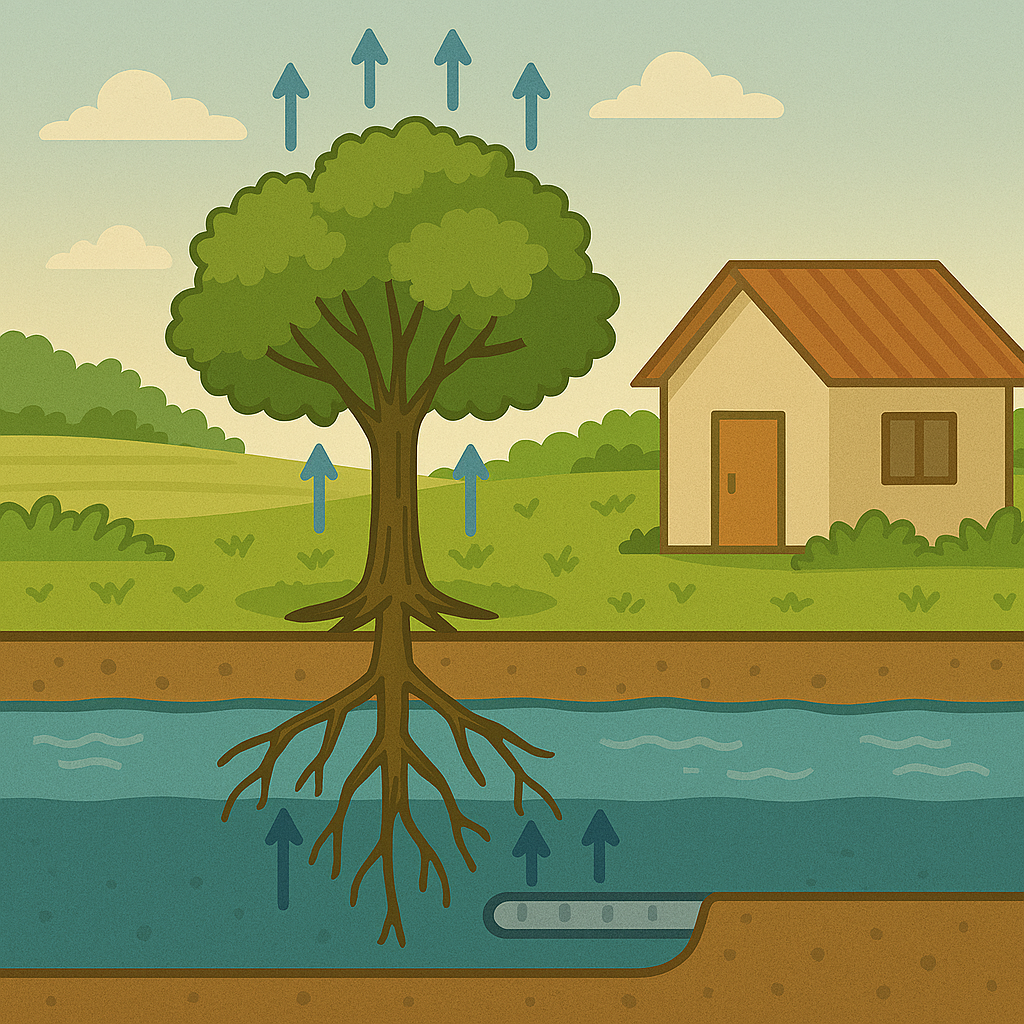
Managing excess water in residential landscapes—especially in clay heavy regions like Northeast Ohio—often leads homeowners to engineered solutions like French drains, sump pumps, catch basins, or regrading. These drainage systems types can be effective, but they all share one limitation: they move water rather than remove it.
3. Space Plants Generously Crowded roots trap moisture. Give each plant enough room to breathe so water can move through the soil instead of pooling around stems.

Biodrainage offers a fundamentally different approach. Instead of relying on pipes or pumps, it uses the natural water moving power of trees and shrubs to dry saturated soil over time. Below is a clear comparison of biodrainage versus traditional drainage systems, along with its key advantages, disadvantages, and the conditions where it performs best.

Biodrainage uses deep rooted, high transpiration trees and shrubs to pull water from the soil and release it into the atmosphere. Mature trees can move 50–300 gallons of water per day, making them powerful biological pumps.

Comparing Biodrainage to Other Drainage Methods.

Biodrainage vs. Yard Drains: French Drains & Catch Basins.
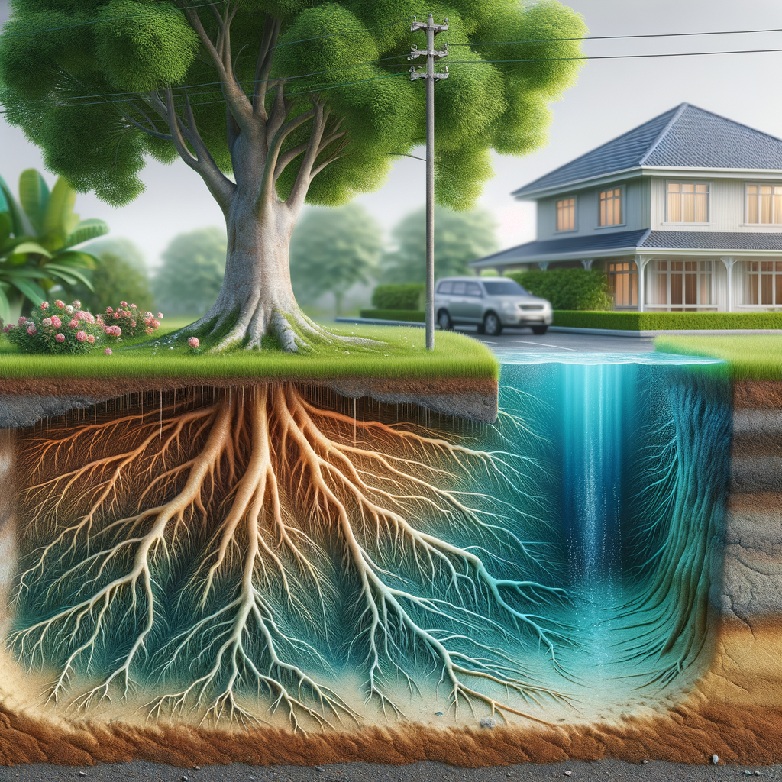
A French drain consists of perforated pipes laid within a layer of gravel to collect and divert water—typically into dry wells for storage. Its undeniable advantage is the immediate removal of surface water, especially on naturally sloping sites; it is the best method for managing stormwater runoff.
However, installing an underground site area drain system requires extensive excavation and the purchase of costly materials. The system is prone to issues such as overflowing wells and clogged pipes, necessitating regular maintenance. Furthermore, positive underground and vertical drainage systemsare not designed to lower soil moisture levels and are ineffective in areas with a high water table.
Which Trees in Cleveland Evaporate the Most Water?

In contrast, biodrainage is more effective in high-water-table conditions; it does not clog and involves no mechanical components.

It improves soil structure over time. While the initial effect is slower to materialize, the natural drainage system offers a much longer service life.

Sump pumps mechanically remove water from basements or crawl spaces. They rapidly evacuate water, effectively addressing active flooding. However, they do not dry out the soil surrounding the house and rely heavily on electricity; if the pump fails, the problem immediately resurfaces.
Bio-drainage reduces hydrostatic pressure on the foundation and lowers soil moisture levels. It operates continuously without electricity, making it an ideal complement to a sump pump. Together, they form an ideal drainage system for the basement.
If water pools in one spot due to a poor slope, the surface can be regraded; eliminate the depression, and the puddle disappears. However, if the site is level and the issue stems from a high water table, altering the terrain won’t help. Major earthworks can be costly and may require official approvals and permits.
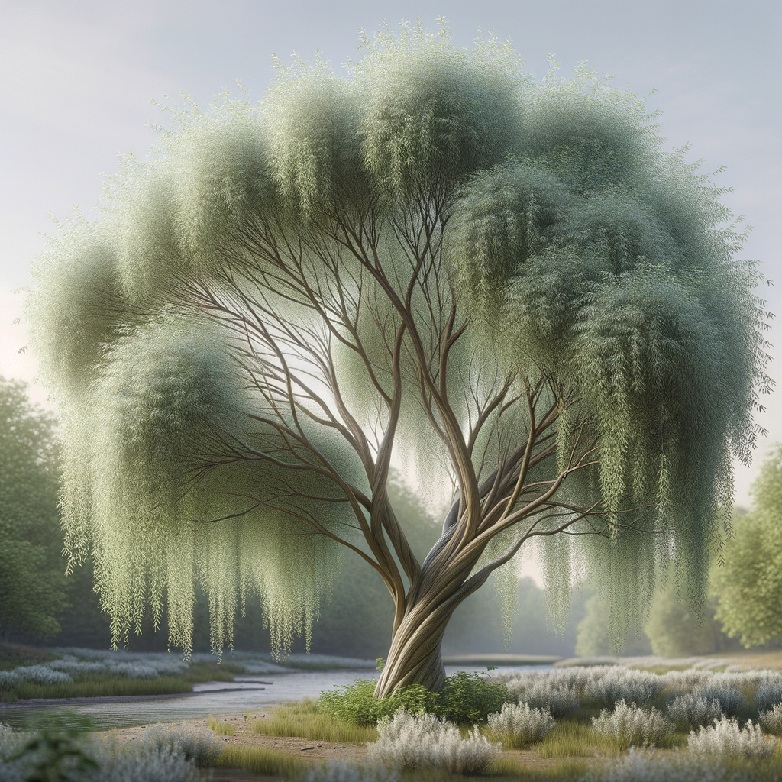
Some local trees evaporate huge amounts of water. Willows, hybrid poplars, river birch, red maple, and swamp white oak can pull 50–200+ gallons a day in wet soil. They’re nature’s sump pumps.

Biodrainage works effectively even on flat, waterlogged sites.

It improves water absorption by loosening clay soil and enhances the property's appearance rather than disrupting the landscape. You simply need to plant the right vegetation.
🌿 Key Advantages of Biodrainage.

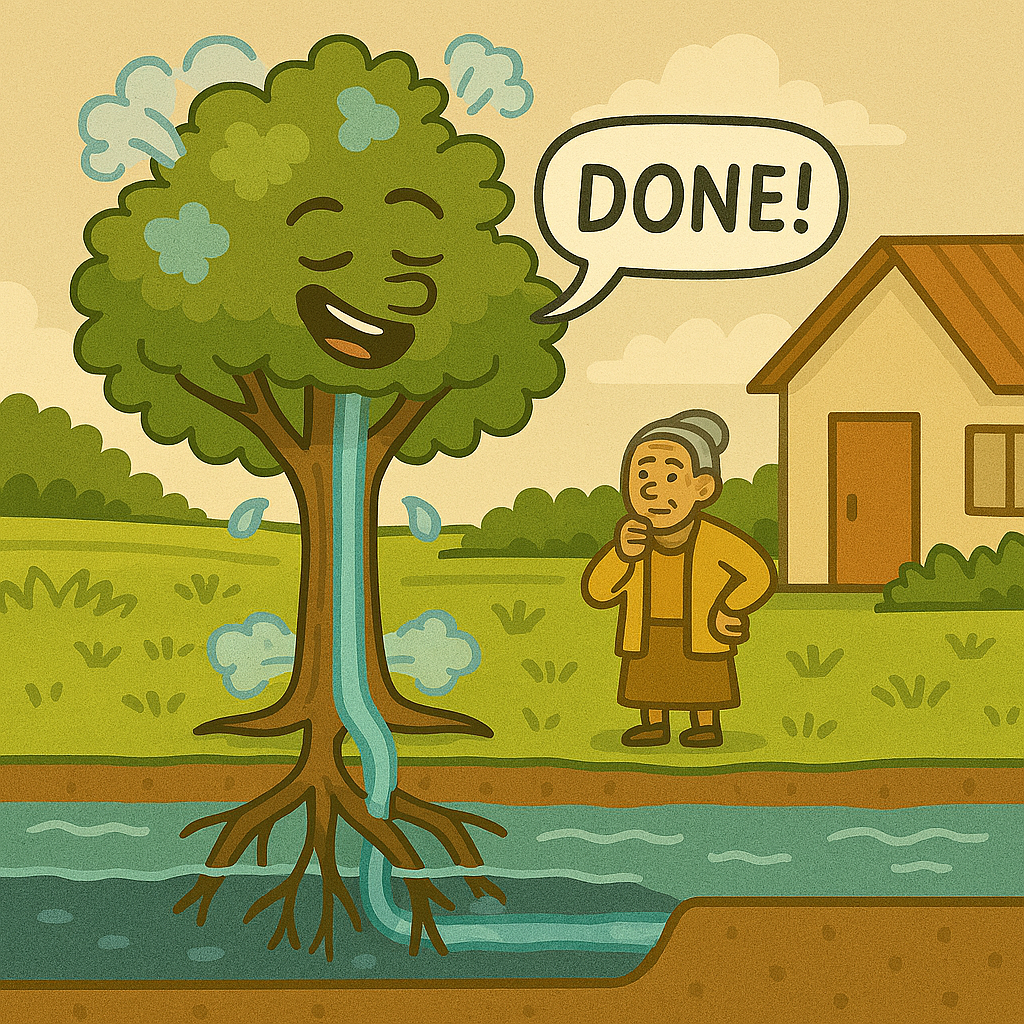
Marv drank and drank until he felt like a giant wooden straw stuck in a giant muddy milkshake. The water rushed up his trunk like it was late for a meeting, shot into his leaves, and *poof* — evaporated into the sky like it had somewhere better to be.

Autonomy.
Works 24/7 without human intervention.
No monitoring, no power source, no repairs.
Self sustaining once established.

Disadvantages of Biodrainage.

Slower initial results compared to mechanical systems.
Requires space for trees and shrubs.
Not ideal where roots cannot be planted (utilities, septic fields, tight urban lots).
Species selection matters—wrong species = low impact.
Performance increases with plant maturity, not instantly.
May need periodic replacement of aging trees to maintain peak effec that stay wet for weeks.
Properties where French drains have repeatedly failed.

⭐ Reasons to Choose Biodrainage.

Biodrainage is particularly effective in multi-tiered group plantings (trees, shrubs, and perennial plants), taking into account plant age and transpiration intensity.
Homeowners choose biodrainage when they want:
A long term, sustainable solution.
A system thwhere engineered drains struggle.
A way to reduce basement moisture by lowering soil saturation.

Biodrainage is not just a quality drainage solutions—it’s a biological water management system that becomes stronger and more effective every year.

0 0 votes
Article Rating
Subscribe
Notify of
guest

0 Comments
Oldest
Newest Most Voted
Translate »
0
Would love your thoughts, please comment.x
()
x