• (216) 767-6323
  • office@juststumpit.com
  • OHIO

Report It: Protect Ohio Trees From Dangerous Invasive Pests.

Report It: Protect Ohio Trees From Dangerous Invasive Pests.

Ohio’s trees face growing pressure from invasive insects and pathogens that can weaken neighborhoods, damage ecosystems, and create hazardous deadwood. Some of these pests are already here. Others — like the European chestnut moth — have devastated trees overseas and could threaten our buckeyes if introduced.

Early reporting is one of the most powerful tools we have. If you spot unusual damage, don’t wait. A single report can help stop an outbreak before it spreads.

Major Invasive Pests to Watch For.

European Chestnut Moth (Cameraria ohridella) — Not in the U.S. yet.
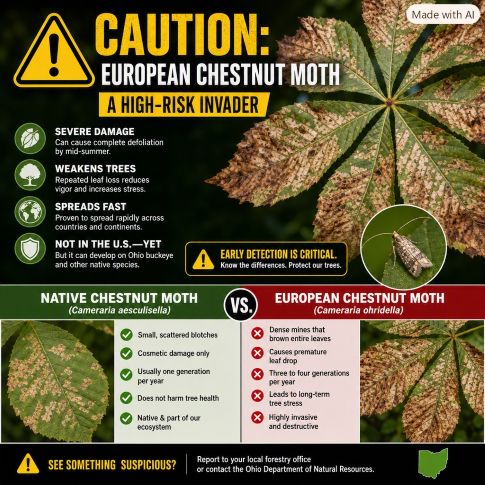
European chestnut moth warning graphic showing leaf mining damage.

European Chestnut Moth (Cameraria ohridella) — Not in the U.S. yet.

This pest has destroyed horse chestnut trees across Europe. It causes dense leaf mining, early browning, and mid summer canopy collapse.

It is not known to be present in the United States, but it can develop on Ohio buckeyes — making our region vulnerable if it ever arrives.
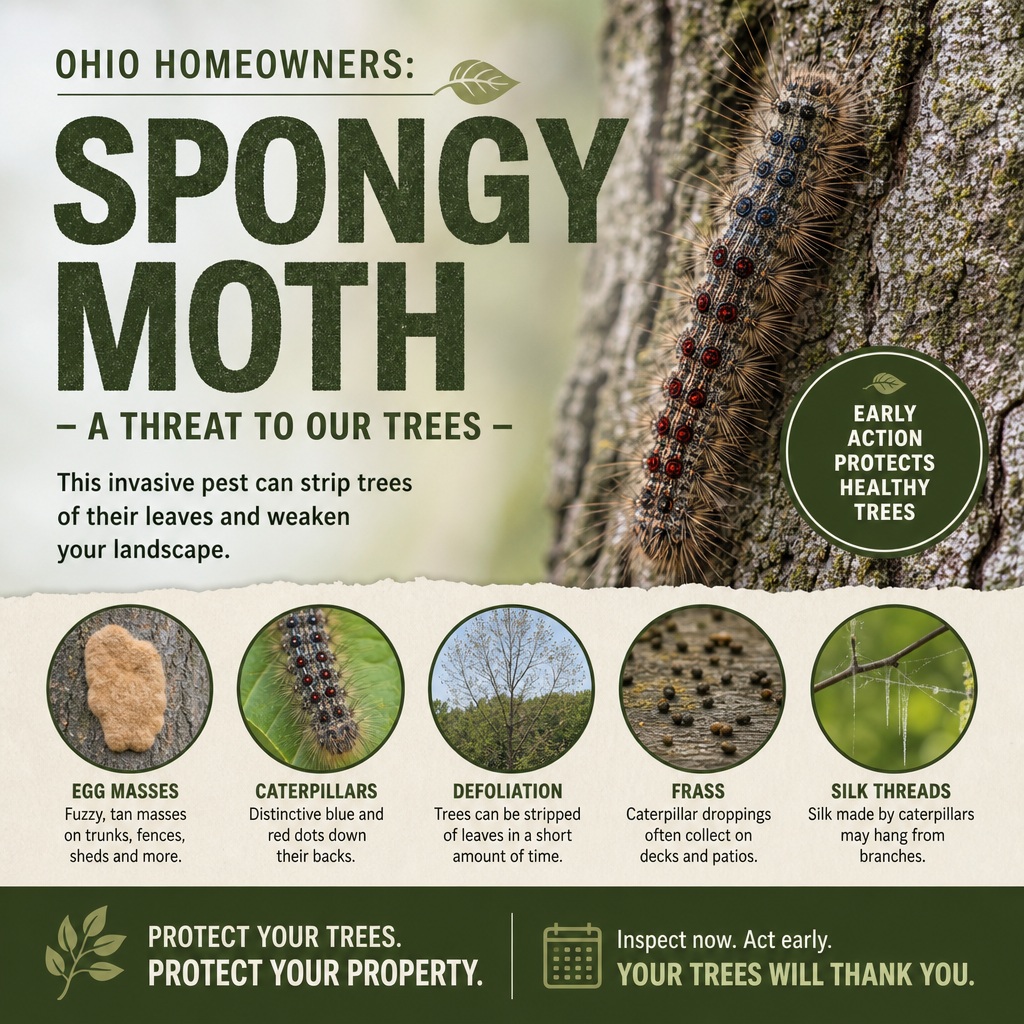
Spongy moth egg masses appear as fuzzy, yellowish-brown clusters on tree trunks, fences, sheds, and garden furniture. You may also notice their droppings accumulating on decks and patios.

Spongy Moth (Gypsy Moth).

Already established in Ohio, this pest defoliates oak, birch, willow, and aspen. Heavy infestations can strip entire neighborhoods bare.

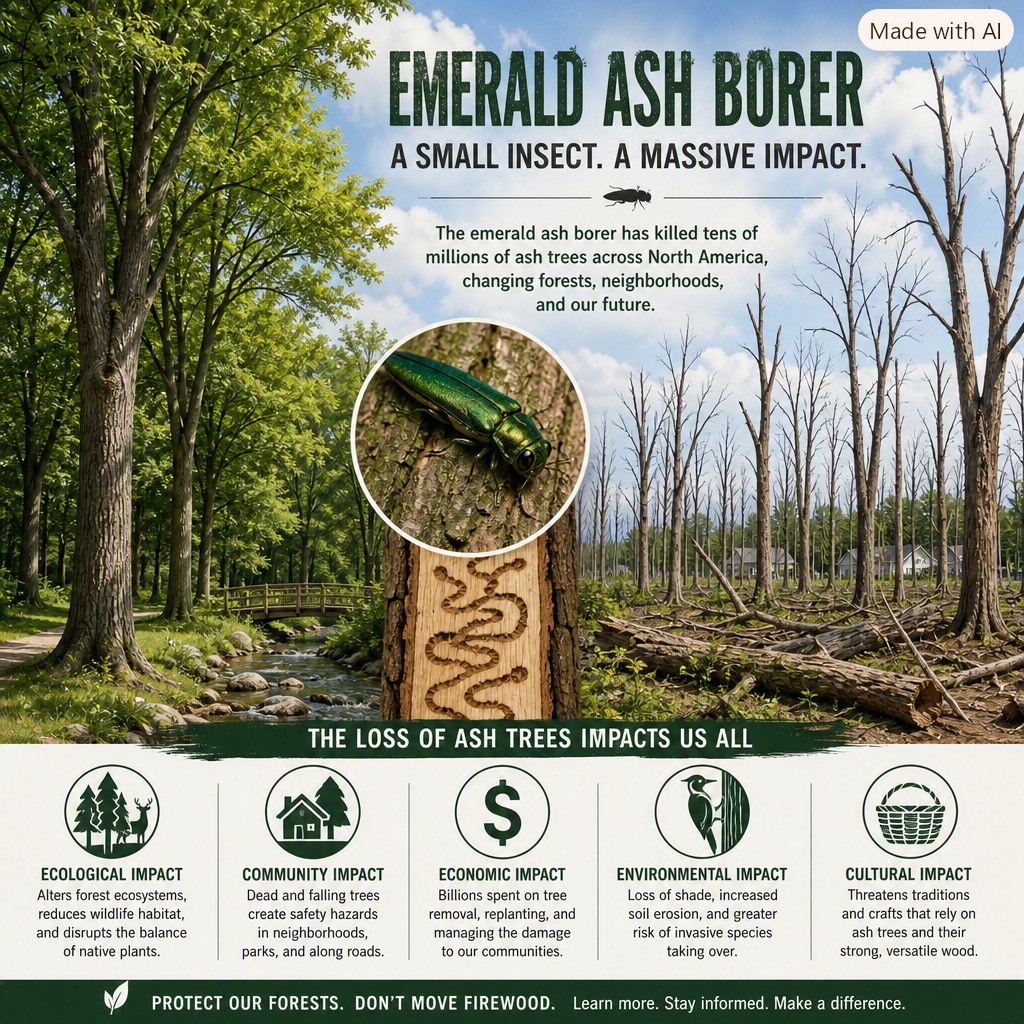
The ash borer beetle is a metallic-green wood‑boring insect native to East Asia. Adults are slender, about ½ inch long, with a bright emerald sheen and a copper‑red abdomen. Although the adults feed on ash leaves, the real damage comes from the larvae. After hatching, larvae burrow beneath the bark and feed on the tree’s phloem and outer sapwood, carving distinctive S‑shaped galleries that disrupt the tree’s ability to transport water and nutrients. This internal damage eventually girdles and kills the tree. Signs of Infestation: Ash trees often decline slowly, making early detection difficult. Key symptoms include: Dead branches near the top of the tree. Vertical bark cracks. Excessive sprouting along the trunk. D‑shaped exit holes left by emerging adults. S‑shaped larval tunnels beneath the bark. Increased woodpecker activity, as they feed on larvae beneath the bark.

Emerald Ash Borer.

One of the most destructive invasive insects in North America. It kills ash trees by tunneling beneath the bark. Signs include canopy dieback, D shaped exit holes, and woodpecker damage.

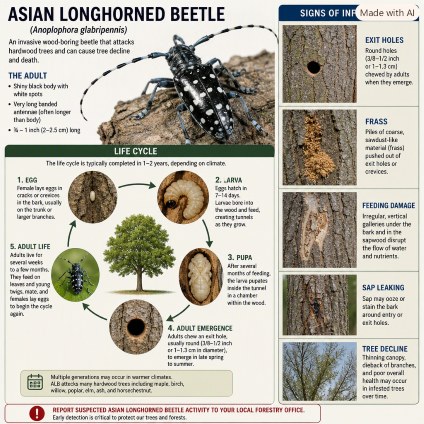
Asian longhorned beetle with distinctive long antennae on tree trunk.

Asian Longhorned Beetle.

A federally regulated pest capable of killing maple, birch, horse chestnut, willow, and elm. Look for large round exit holes and excessive sawdust at the base of the tree.

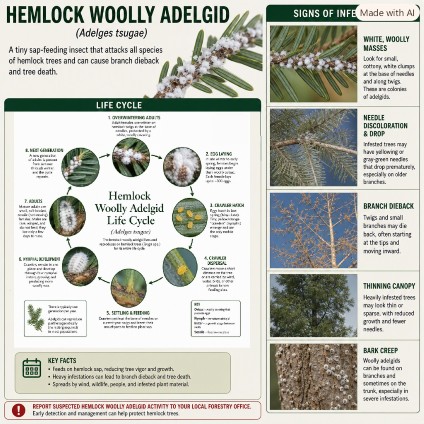
Hemlock woolly adelgid white egg sacs on hemlock branch.

Hemlock Woolly Adelgid.

A tiny insect that kills hemlocks by draining sap from needles. Signs include white cotton like masses, needle loss, and branch dieback.

Life cycle of walnut bark beetles and signs of infestation.

Walnut Twig Beetles and Thousand Cankers Disease.
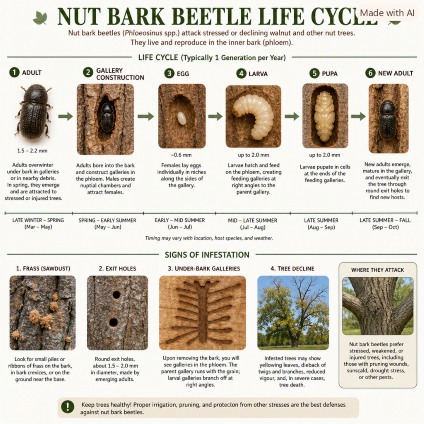
Caused by a fungus spread by walnut twig beetles. It threatens black walnut trees — a valuable part of Ohio’s forest and urban canopy.

When to Report.

Report any of the following:

Where to Report Suspected Invasive Pests.

Ohio Department of Natural Resources (Division of Forestry). Call 614 265 6694 or use the ODNR Invasive Species Reporting Form.

USDA APHIS Plant Protection and Quarantine (PPQ). Submit sightings through your state Department of Agriculture or the USDA APHIS online reporting portal.
County Cooperative Extension Offices. Local experts can help identify pests and forward samples to USDA labs.

Why Reporting Matters.

Invasive pests spread silently. By the time damage is obvious, entire neighborhoods may be affected. Early reporting helps protect Ohio’s buckeyes, maples, oaks, and ash prevent hazardous tree decline. Reduce costly removals, preserve shade, property value, and neighborhood beauty.

We see the impact of invasive pests every day. Dead and declining trees become dangerous — especially near homes, sidewalks, and driveways.

If you suspect a tree is failing or unsafe, contact us for safe, professional removal.
0 0 votes
Article Rating
Subscribe
Notify of
guest

0 Comments
Oldest
Newest Most Voted
Translate »
0
Would love your thoughts, please comment.x
()
x