How Trees Improve the Air Around Your Home
Trees do far more than shape the look of a property — they actively clean, cool, and refresh the air we breathe every day. Whether you live in a busy neighborhood or a quiet suburban street, the trees on and around your property play a powerful role in creating a healthier environment for you and your neighbors.
Below is a clear, homeowner friendly look at how trees impact the surrounding air and why maintaining a healthy tree canopy matters.
1. Trees Filter Pollutants From the Air
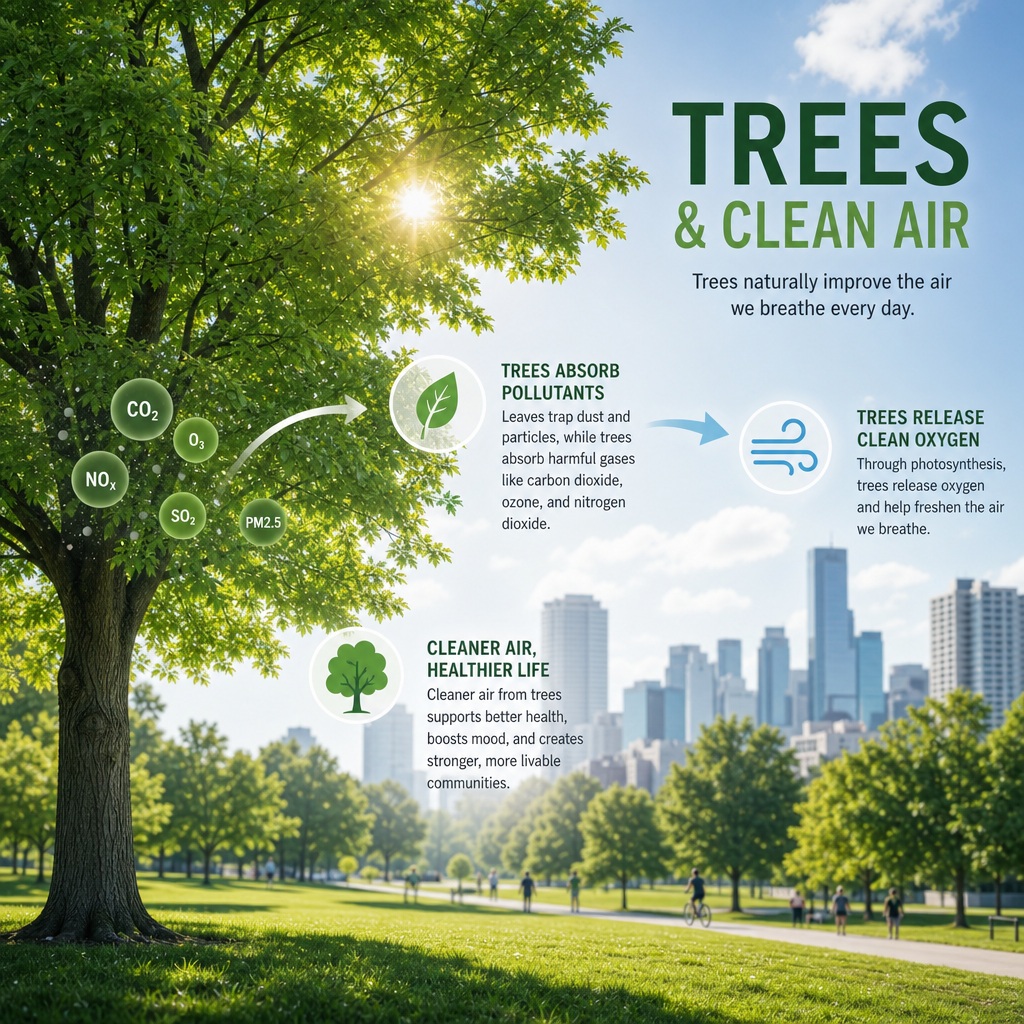
Every day, trees act like natural air purifiers. Their leaves and needles capture airborne pollutants such as:
– dust
– smoke
– pollen
– mold spores
– vehicle emissions
– industrial particles
These pollutants stick to the leaf surface instead of staying in the air you breathe. When rain washes them away or leaves fall and decompose, the particles are removed from circulation.
Healthy, vigorous trees filter the most air, while old, declining, or diseased trees lose much of this ability as their canopy thins.
2. Trees Produce Clean Oxygen
Through photosynthesis, trees absorb carbon dioxide and release oxygen. A single mature tree can produce enough oxygen to support several people each day.
The more leaf surface a tree has, the more oxygen it can produce — which is why full, healthy crowns are essential. As trees age and lose canopy density, their oxygen output naturally decreases.
3. Trees Cool the Air Through Shade and Transpiration
Trees cool the surrounding air in two major ways:
Shade
Their canopies block direct sunlight, reducing heat buildup on lawns, driveways, and homes. This lowers surrounding temperatures and reduces the need for air conditioning.
Transpiration
Trees release water vapor through their leaves — a process that cools the air the same way sweat cools the human body.
High water use species and young, vigorous trees transpire the most.
Old or declining trees transpire far less because:
– their root systems weaken
– their canopy becomes sparse
– their leaf surface area shrinks
This is one reason replacing aging trees can restore cooling benefits to a property.
4. Trees Release Phytoncides That Clean and Refresh the Air
Trees don’t just filter pollutants — they actively release natural protective compounds called phytoncides. These antimicrobial chemicals help trees defend themselves from insects, bacteria, and fungi, and they also benefit the air around your home.
They reduce airborne microbes
Phytoncides help lower the concentration of harmful bacteria and fungal spores in the air, creating a cleaner breathing environment.
They improve air freshness
These compounds contribute to that crisp, “forest air” feeling people notice in wooded areas. Even a few healthy trees can subtly improve the freshness of the air around your yard.
They support human well being
Studies show that breathing low levels of phytoncides can help reduce stress and support immune function. While the strongest effects occur in forests, homeowners still benefit from having vigorous trees nearby.
Healthy trees release more phytoncides
Just like with oxygen production and pollutant filtering, a tree’s ability to release phytoncides depends on its canopy health.
Declining, diseased, or hollow trees release far fewer beneficial compounds.
5. Trees Reduce Greenhouse Gases
Trees store carbon in their trunks, branches, and roots. This helps reduce the amount of carbon dioxide — a major greenhouse gas — in the atmosphere.
However, when a tree becomes old, hollow, diseased, or structurally unstable, it can begin releasing carbon instead of storing it. Removing hazardous or declining trees and replacing them with young, vigorous ones keeps your landscape’s carbon balance positive.
6. Trees Improve Airflow and Reduce Dust
Strategically placed trees can act as natural windbreaks, slowing down strong winds that carry dust, debris, and pollutants. This is especially helpful in open yards, near roads, or in areas with frequent construction.
Healthy trees with full crowns are the most effective at improving airflow and reducing airborne dust.
Why Tree Health — and Tree Replacement — Matters
The environmental benefits of trees depend heavily on their condition.
A healthy tree improves air quality. A declining tree contributes far less — and may even become a safety risk.
When a tree becomes:
- old
- hollow
- diseased
- storm damaged
- structurally unstable
…it loses much of its ability to filter air, produce oxygen, release phytoncides, and cool the environment. In many cases, removing an aging tree and planting a new one restores the environmental benefits your property depends on.
A Healthier Yard Starts With Healthy Trees
Trees are one of the most valuable natural assets on any property. By maintaining them — and replacing them when they become old or unsafe — you help keep your yard cleaner, cooler, and healthier for years to come.
Manager
0