How do you grow thick, emerald-green grass after grinding a stump?
Why It’s Hard to Grow a Beautiful Lawn After Stump Grinding
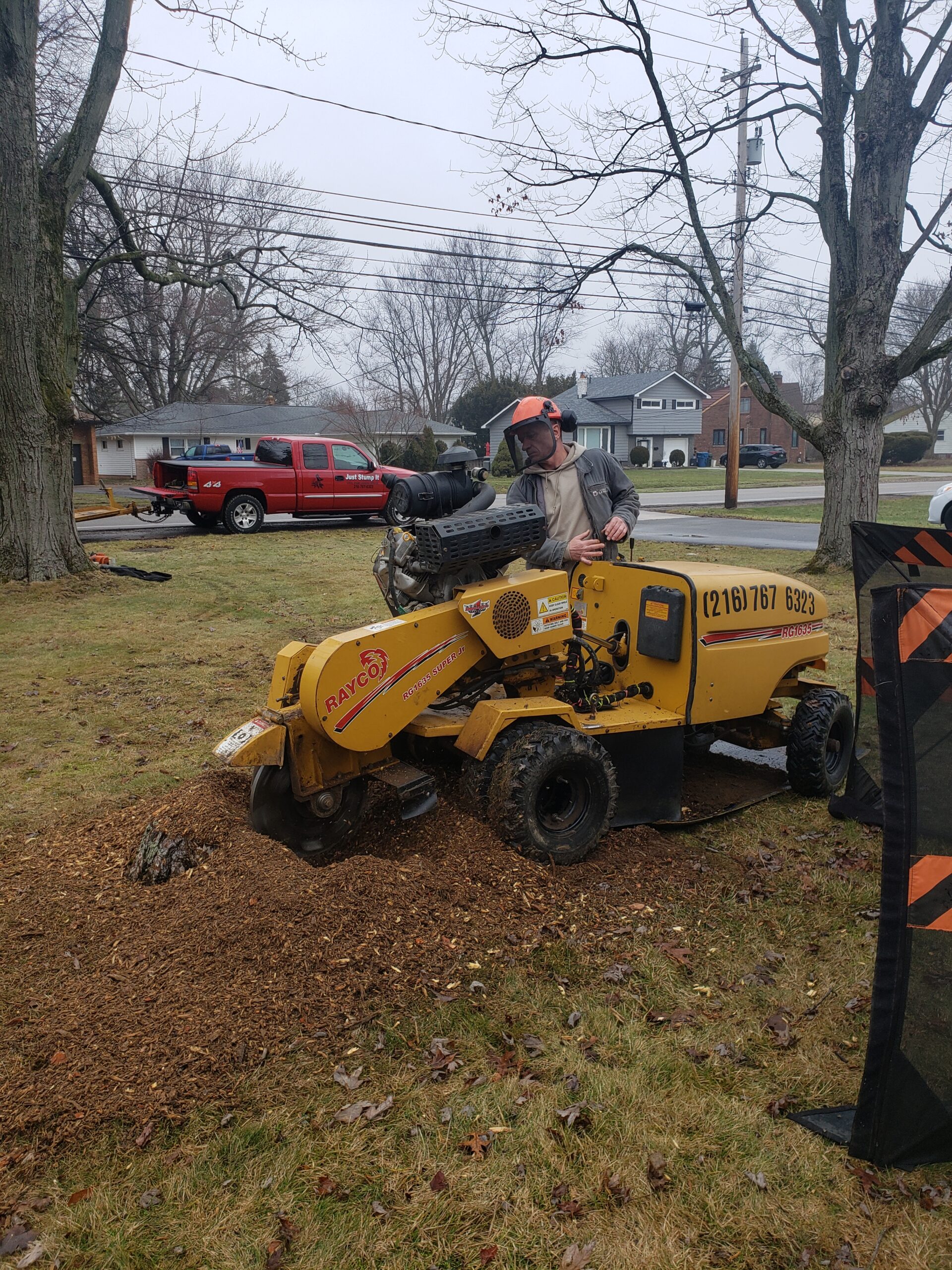
When a stump is ground out, the surface looks ready for grass — but underneath, the soil is still recovering. The area is usually filled with wood chips, sawdust, and decaying roots, all of which compete with new grass for nutrients. As that buried wood breaks down, it steals nitrogen, leaving the soil weak and unable to support healthy growth. The ground is often uneven and compacted, making it tough for new roots to spread. Until the soil is rebuilt with fresh topsoil and nutrients, grass will struggle to grow thick and green.
Prepare the ground.
- First remove large debris and wood chips. Compact the area well to prevent soil subsidence. Add soil if necessary. Water thoroughly. If possible, have the soil tested (the step most people skip).
- If possible, have the soil tested (the step most people skip).
- A simple soil test tells you:
- Whether your lawn is low on nitrogen, phosphorus, or potassium
- If the pH is off (Cleveland soils often lean acidic)
- How much fertilizer you actually need.
- This prevents over fertilizing and saves money.
- To achieve a dense, emerald-green turf, the balance of macronutrients should be close to a 3:1:2 ratio. The ideal pH level for lawn grass is 6.0–7.0.
Choose the right fertilizer.
Apply a starter fertilizer to the lawn.
Unlike standard spring fertilizers, starter fertilizers have a higher phosphorus content. This helps the grass establish roots more quickly.
Popular formulations (Nitrogen : Phosphorus : Potassium)
19:25:5
12:11:18
Choose a ratio that helps adjust the macronutrient balance of your soil. Adjust the soil acidity.
Starter fertilizer only when seeding or overseeding.
Apply at the right time.
- Cool season lawns follow a simple schedule: Spring (active growth): Nitrogen-rich fertilizers are required for rapid recovery after winter (e.g., an NPK 20-10-10 formula or specialized spring blends).
- Summer (maintenance): A balanced formula (10-10-10) to maintain turf density.
- Autumn (winter preparation): Nitrogen-free fertilizers with high phosphorus and potassium content to strengthen roots (e.g., a 0-10-20 formula or autumn blends).
- To avoid burning the grass, apply dry fertilizers using a dedicated spreader only to a dry lawn, and be sure to water the area thoroughly after application. Avoid fertilizing in midsummer heat — it stresses the grass.
Spread evenly.
Use a broadcast or drop spreader and follow these rules:
– Walk at a steady pace
– Overlap slightly so you don’t leave stripes
– Apply half the product in one direction, half in the opposite direction for perfect coverage
Uneven spreading = light green/dark green streaks.
Water correctly after fertilizing.
- Granular fertilizer: Water lightly to activate it .
- Liquid fertilizer: No watering needed unless the label says so.
- Slow release products: Watering helps them break down gradually.
- Never fertilize right washes away nutrients and wastes money.
- Keep fertilizer off hard surfaces.
- Sweep fertilizer off sidewalks and driveways so it doesn’t wash into storm drains. This also prevents rust stains on concrete.
Don’t overdo it.
More fertilizer does not mean more growth.
Too much nitrogen:
– Burns grass
– Causes thatch buildup
– Makes the lawn more disease prone
Stick to the recommended pounds of nitrogen per 1,000 sq ft.
Proper watering.
- Water daily. Young grass needs daily watering. Once the lawn is well-established, the frequency of watering should be reduced.
- Water Deep, Not Daily. A long soak 2–3 times a week builds deeper roots and a tougher lawn. Quick daily sprinkles only encourage shallow growth.
- Morning Watering Wins. Water early so your lawn dries through the day. Evening watering encourages fungus and disease. Watering on a bright, sunny day can cause burns.
Control Weeds Early.
Overseed Thin Spots. Bare patches invite weeds. Overseed in spring or fall to thicken your lawn and crowd out trouble. Young weeds are easier to stop. Treat them before the y seed and spread across the yard.
Got a young lawn you’re proud of—or still figuring out?
Share your best tips, tricks, and little secrets for helping new grass grow strong and healthy. Drop them in the comments so other homeowners can learn from your experience. Wishing you success as your lawn fills in and gets greener every week.
Please fill out the form on this page to order stump grinding services or to get a free estimate. Or contact us by cellphone 216-767-6323.
Manager
0