• (216) 532-9138
  • office@juststumpit.com
  • OHIO

How River Birch Water Use Compares to Other Biodrainage Trees
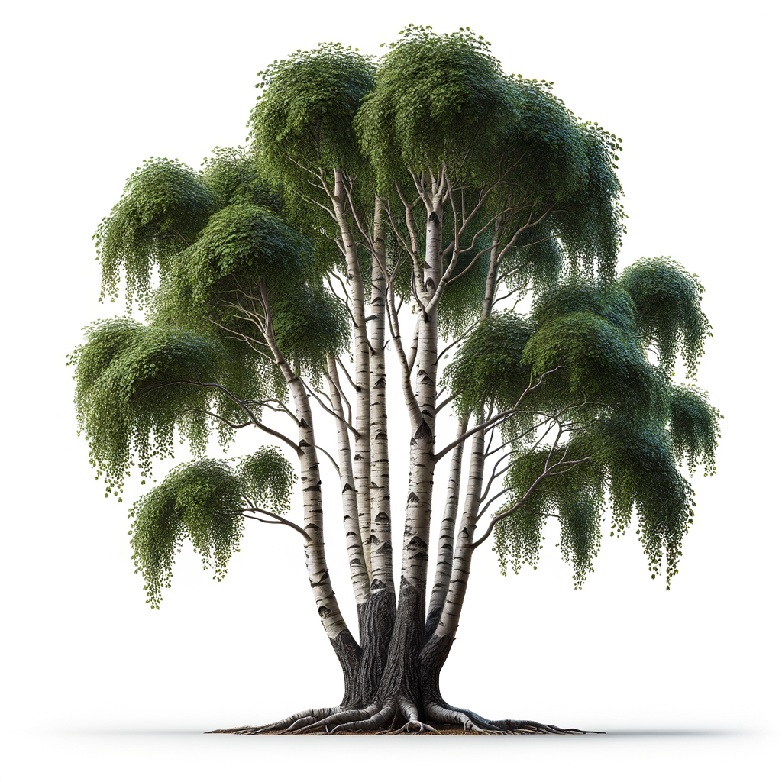
These species combine high water use with strong ornamental value—perfect for homeowners who want beauty and function.
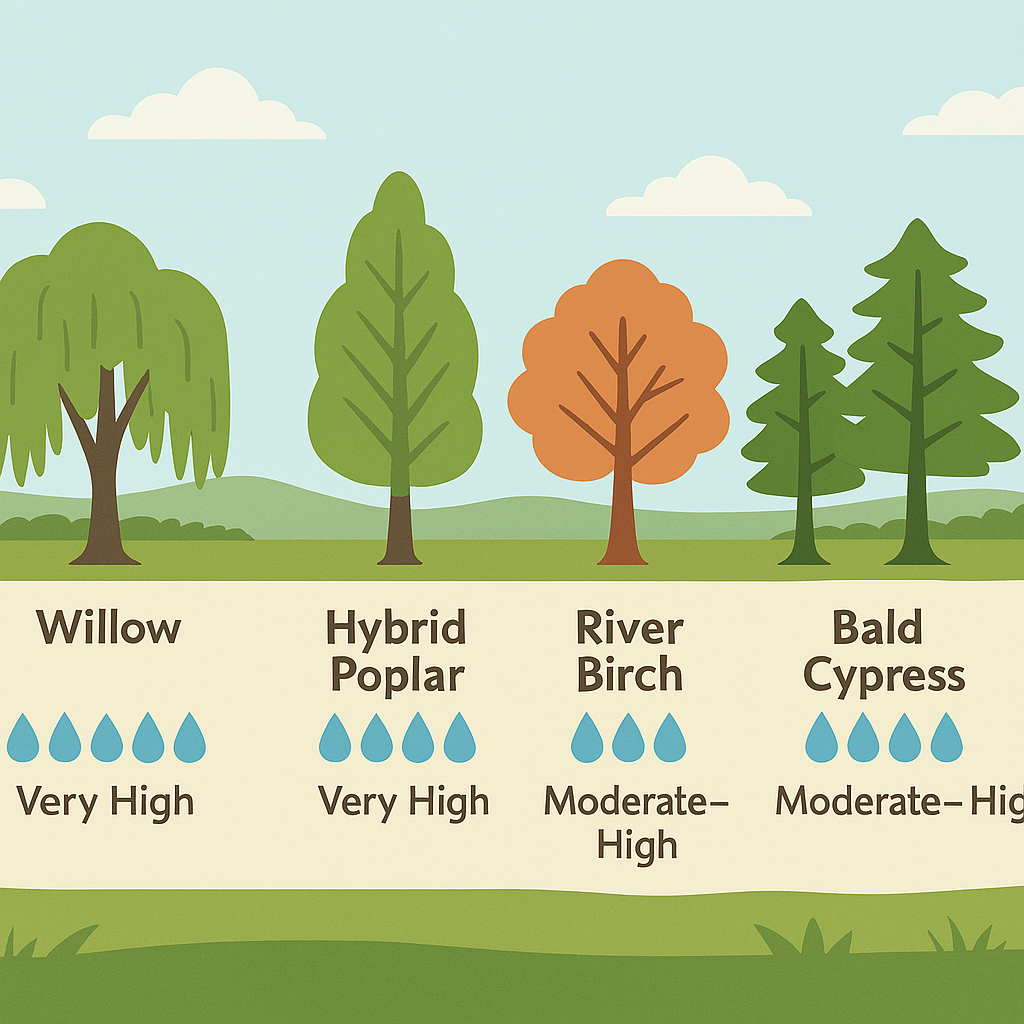
Because direct gallon‑per‑day measurements vary by climate, soil moisture, canopy size, and season, scientists often compare trees by relative transpiration capacity rather than exact numbers. The species below are all known for exceptionally high water use. Here’s how river birch stacks up.

Relative Water‑Use Ranking (High → Very High)

Tree Species

Relative Water Use

Notes

Willows (Salix spp.)

Very High
Among the highest water‑use trees on Earth; extremely fast transpiration; ideal for wet soils.

Hybrid Poplars (Populus hybrids)

Very High
Engineered for rapid growth and high water uptake; used in phytoremediation and biodrainage projects.

River Birch (Betula nigra)

High
One of the thirstiest native Eastern U.S. trees; excellent for wet yards; strong summer water use.

Bald Cypress (Taxodium distichum)

Moderate–High
Very tolerant of flooding; steady water use but not as aggressive as willow or poplar.

Red Maple (Acer rubrum)

Moderate–High
Good biodrainage helper; strong transpiration in warm months.

Where River Birch Fits

Trees are unmatched in their ability to move water. A single mature, high‑water‑use tree can evaporate **tens of gallons of water a day** through its leaves. No pump, pipe, or drain works as quietly or as continuously. Their deep roots pull moisture from saturated soil, and their broad canopies release it back into the air — turning excess groundwater into clean vapor. This natural process is why biodrainage succeeds where traditional drainage systems often fall short.

River Birch = High Water Use

Mature specimens can move tens of gallons per day under hot, wet conditions (based on typical transpiration rates of similar-sized high‑use species).

They are not quite as extreme as willows or hybrid poplars, but they are:

Why They’re So Effective?

Wishing you all the best as you design your biodrainage system. It’s a smart step toward a drier, healthier yard, and every bit of planning you put in now will pay off later. If you’d like to share your ideas or ask questions, feel free to leave a comment. And if you ever want professional guidance along the way, don’t hesitate to reach out—expert advice can make the whole process smoother and more effective.
Tags :

Leave a Reply

Your email address will not be published. Required fields are marked *

Translate »