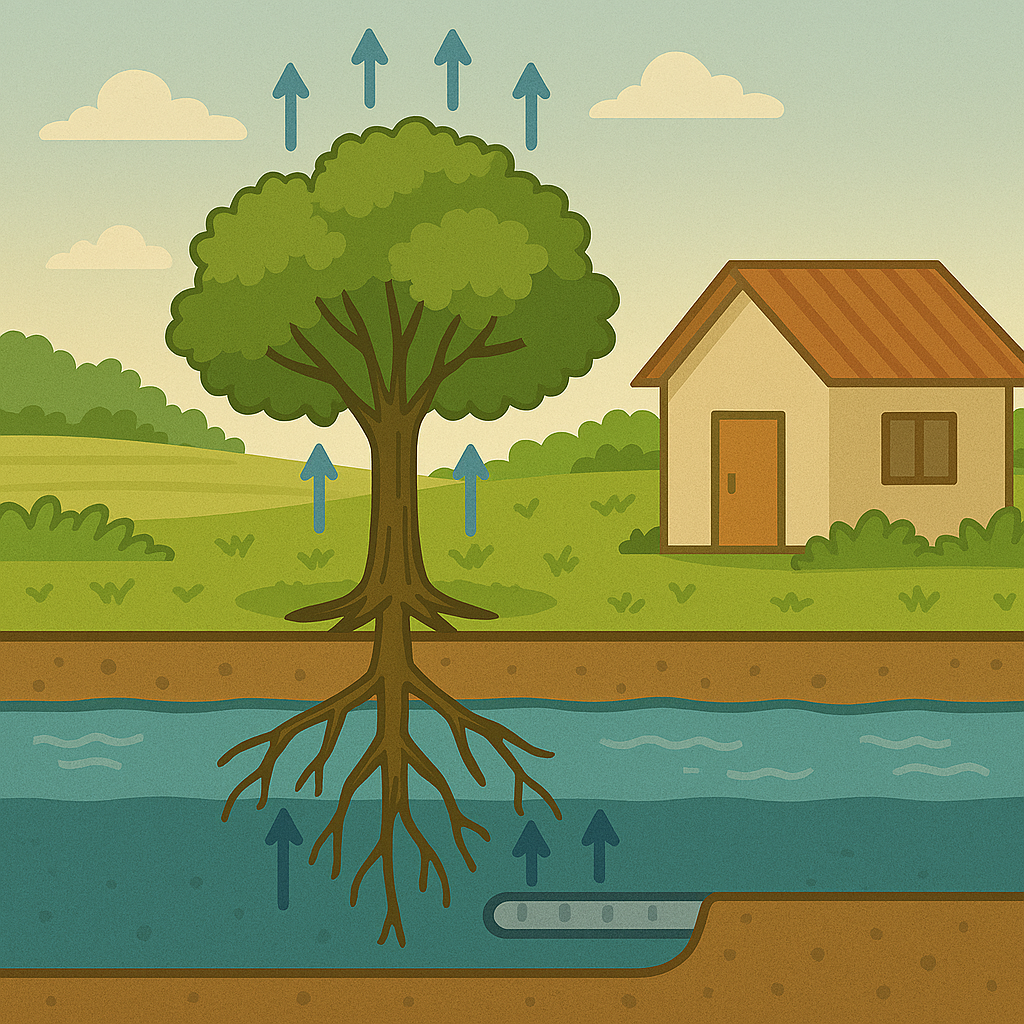
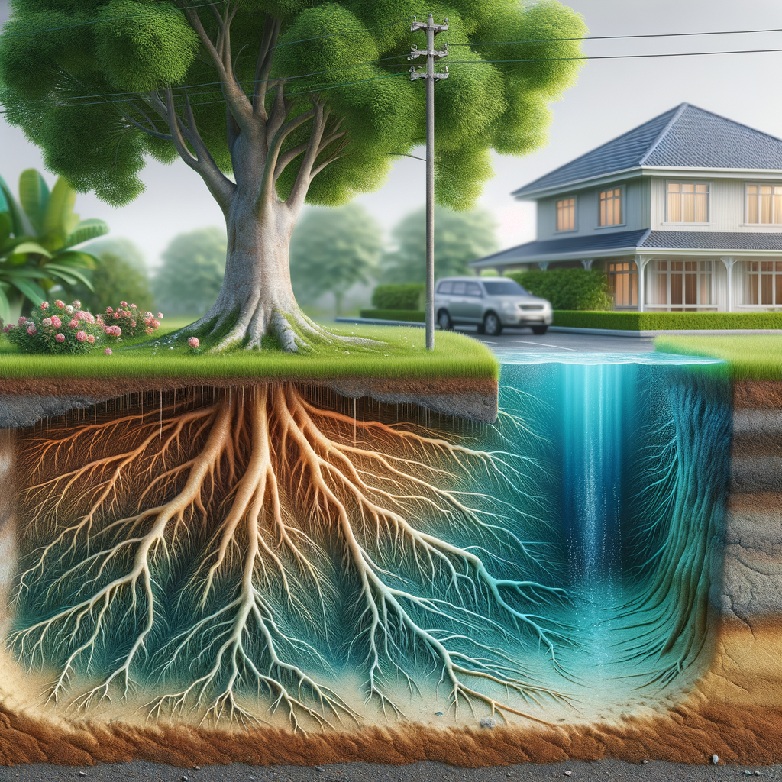
Low spots, swales, and areas where water naturally collects.
2. Use clusters, not single specimens
Groups of trees and shrubs create a stronger cumulative effect.
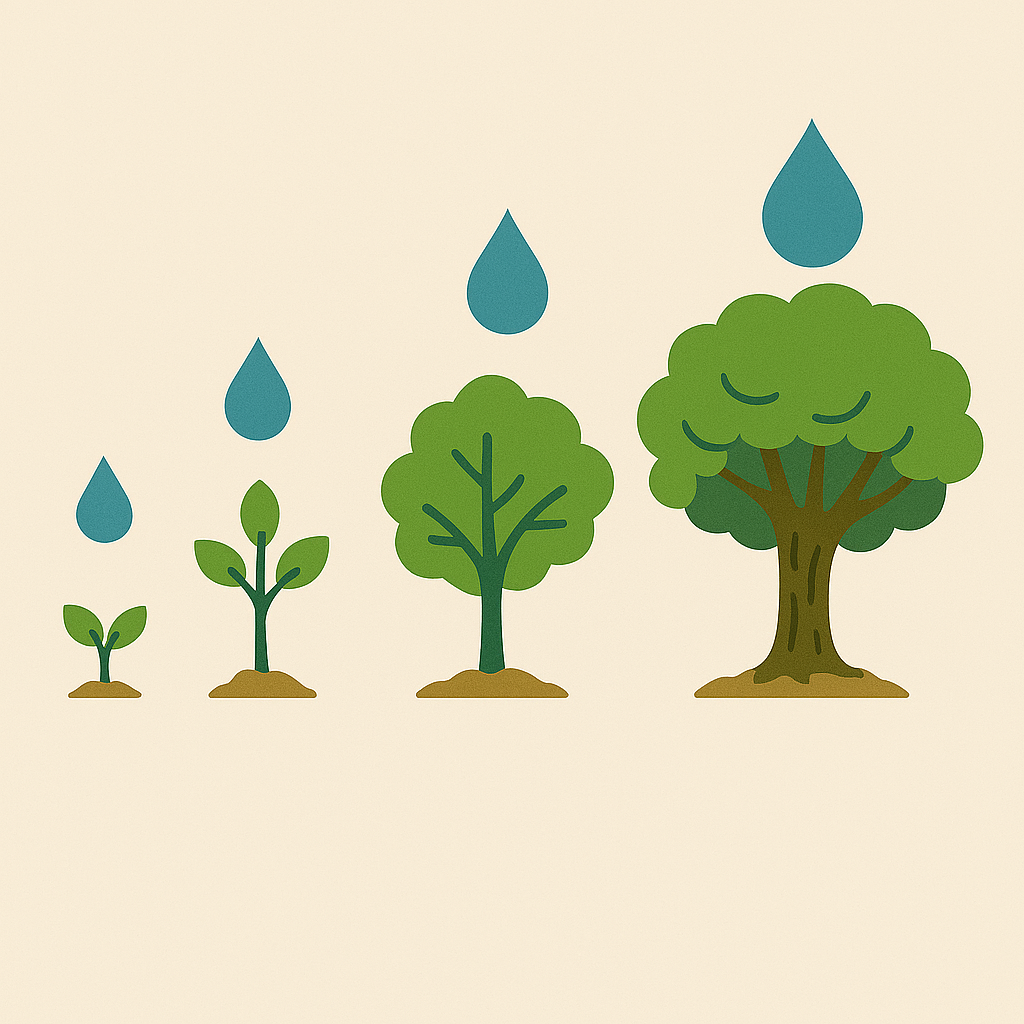
3. Mix ages for immediate and long‑term performance
A few larger nursery trees + younger ones for longevity
4. Consider the individual needs of the plants in terms of soil quality and available space for healthy development.
A stressed or diseased tree can’t manage groundwater.
Practical Takeaway for Biodrainage Design
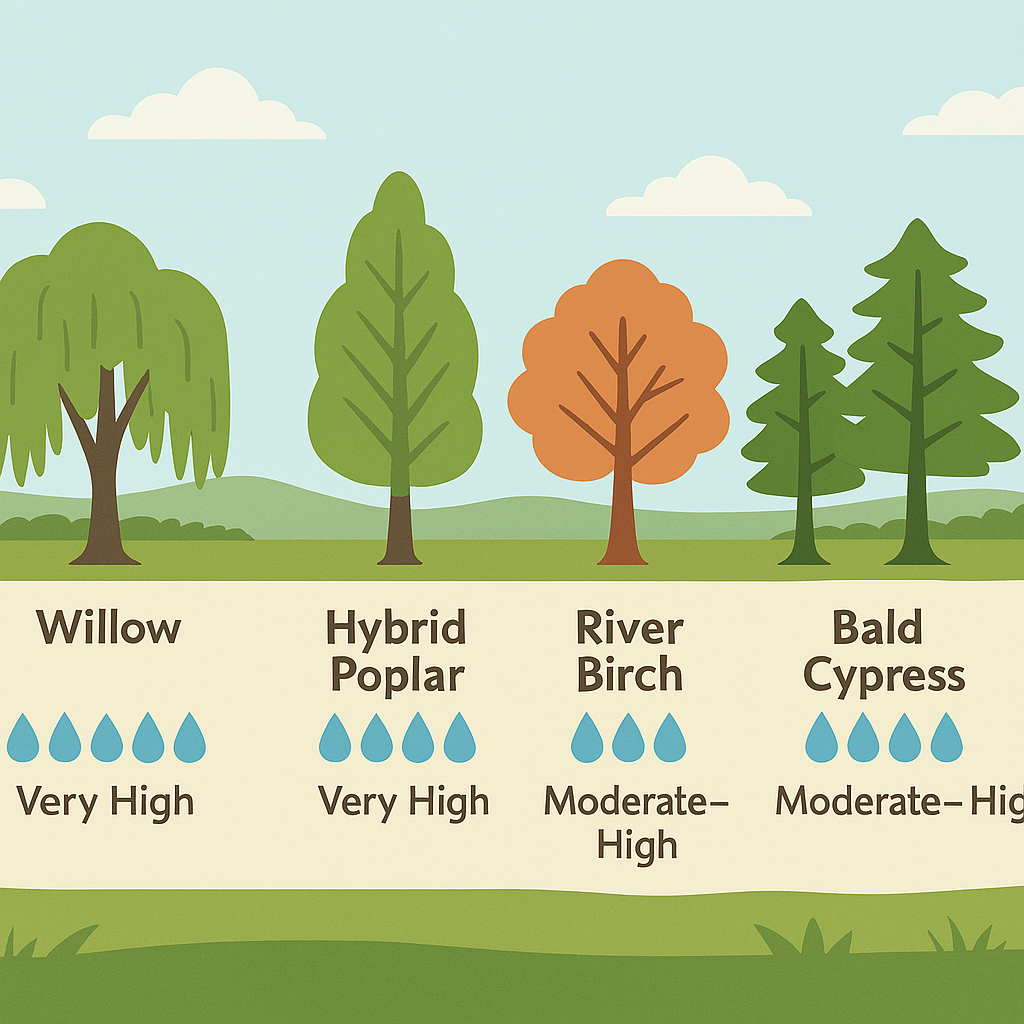
If you want maximum water removal, the ranking goes like this:
1. Willows
Best for extreme wetness, stormwater swales, or large properties.
2. Hybrid Poplars
Best for rapid results; excellent for large wet zones.
3. River Birch
Best all‑around choice for residential landscapes.
High water use.
Beautiful bark and form.
Safer root behavior.
Strong performance in Ohio soils.
4. Bald Cypress & Red Maple
Great supporting species for layered biodrainage systems.
Shrubs That Support Biodrainage:
Red Osier Dogwood (Cornus sericea)
Buttonbush (Cephalanthus occidentalis)
Winterberry Holly (Ilex verticillata)
Elderberry (Sambucus canadensis)
Ninebark (Physocarpus opulifolius)
Wishing you great success on your landscape design journey. May each idea take root and flourish into something truly beautiful. If you’d like to share your plans or have a question, feel free to leave a comment—I’d be happy to hear from you.