• (216) 532-9138
  • office@juststumpit.com
  • OHIO

Why Are There Trees on the Property, but There’s Still a Lot of Water?
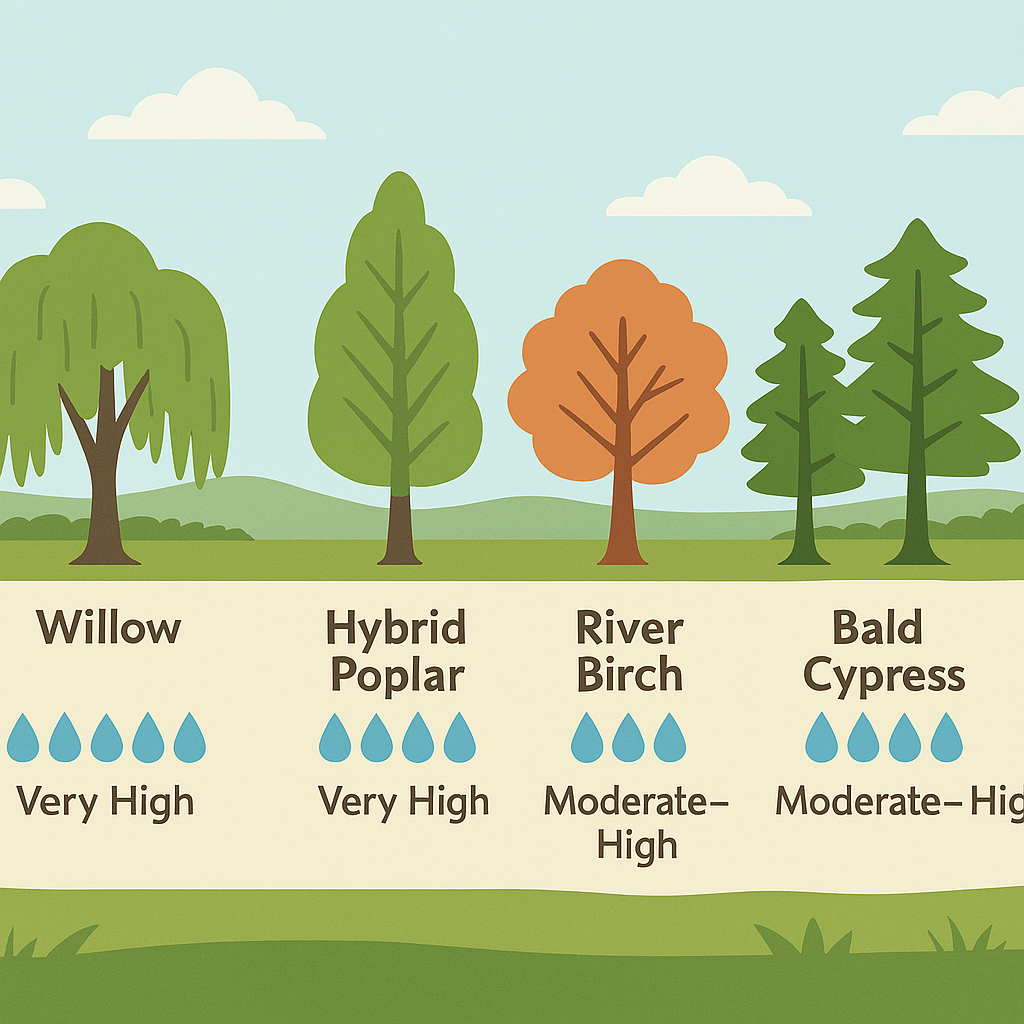
Which Trees in Cleveland Evaporate the Most Water?
Having trees doesn’t automatically mean your yard will dry out. In many cases, the trees on a property simply aren’t the right species, the right age, or in the right condition to make a real difference.

Here’s why water can still linger even when trees are present:

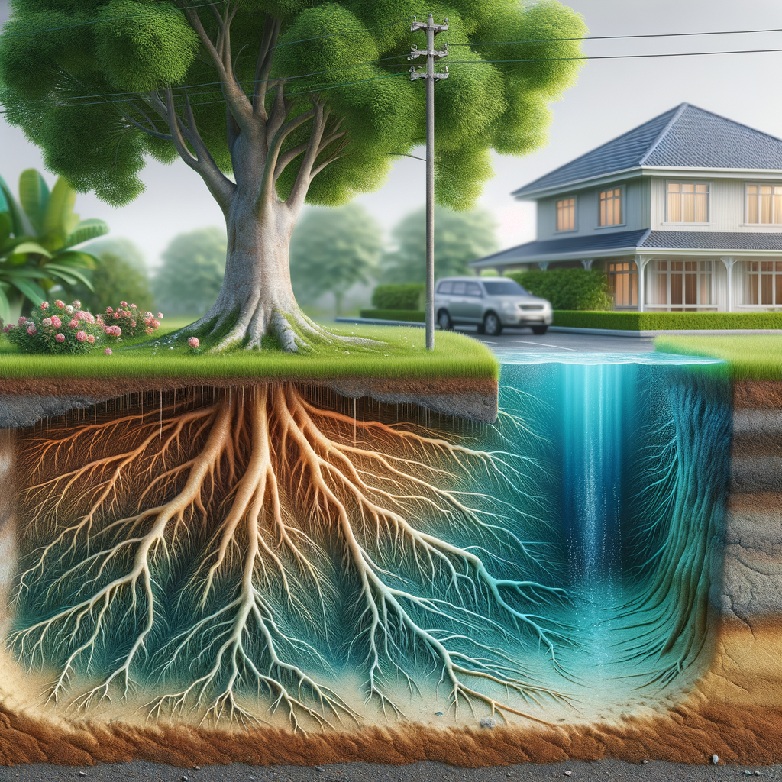
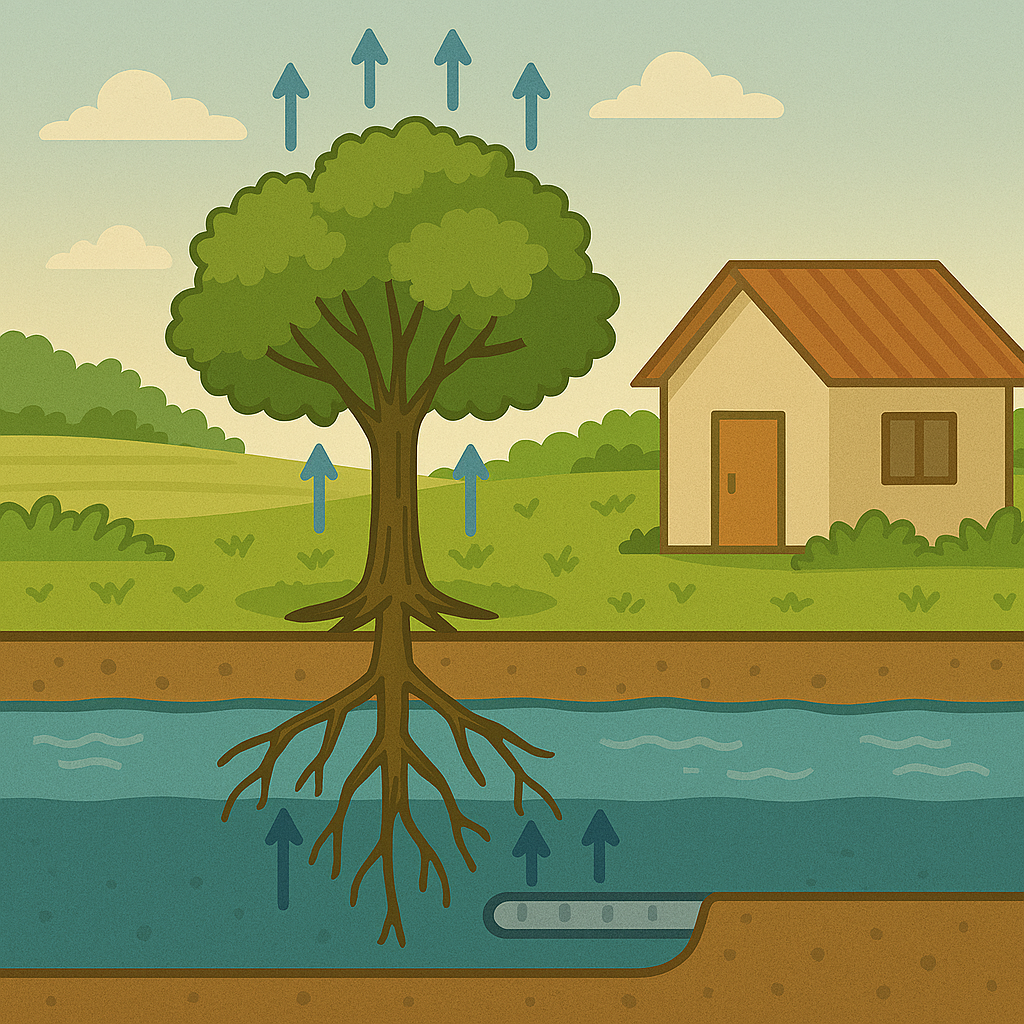
Trees are unmatched in their ability to move water. A single mature, high‑water‑use tree can evaporate **tens of gallons of water a day** through its leaves. No pump, pipe, or drain works as quietly or as continuously. Their deep roots pull moisture from saturated soil, and their broad canopies release it back into the air — turning excess groundwater into clean vapor. This natural process is why biodrainage succeeds where traditional drainage systems often fall short.

1. The Existing Trees Aren’t High‑Water‑Use Species

Many common landscape trees—spruce, pine, ornamental pears, crabapples—use very little water. They look nice, but they don’t pull enough moisture from the soil to lower groundwater.
2. The Trees Are Too Young to Make an Impact

Young trees (0–5 years) have:

- shallow roots

- small canopies

- low transpiration

They simply can’t move enough water yet.

Tree pest infestation.

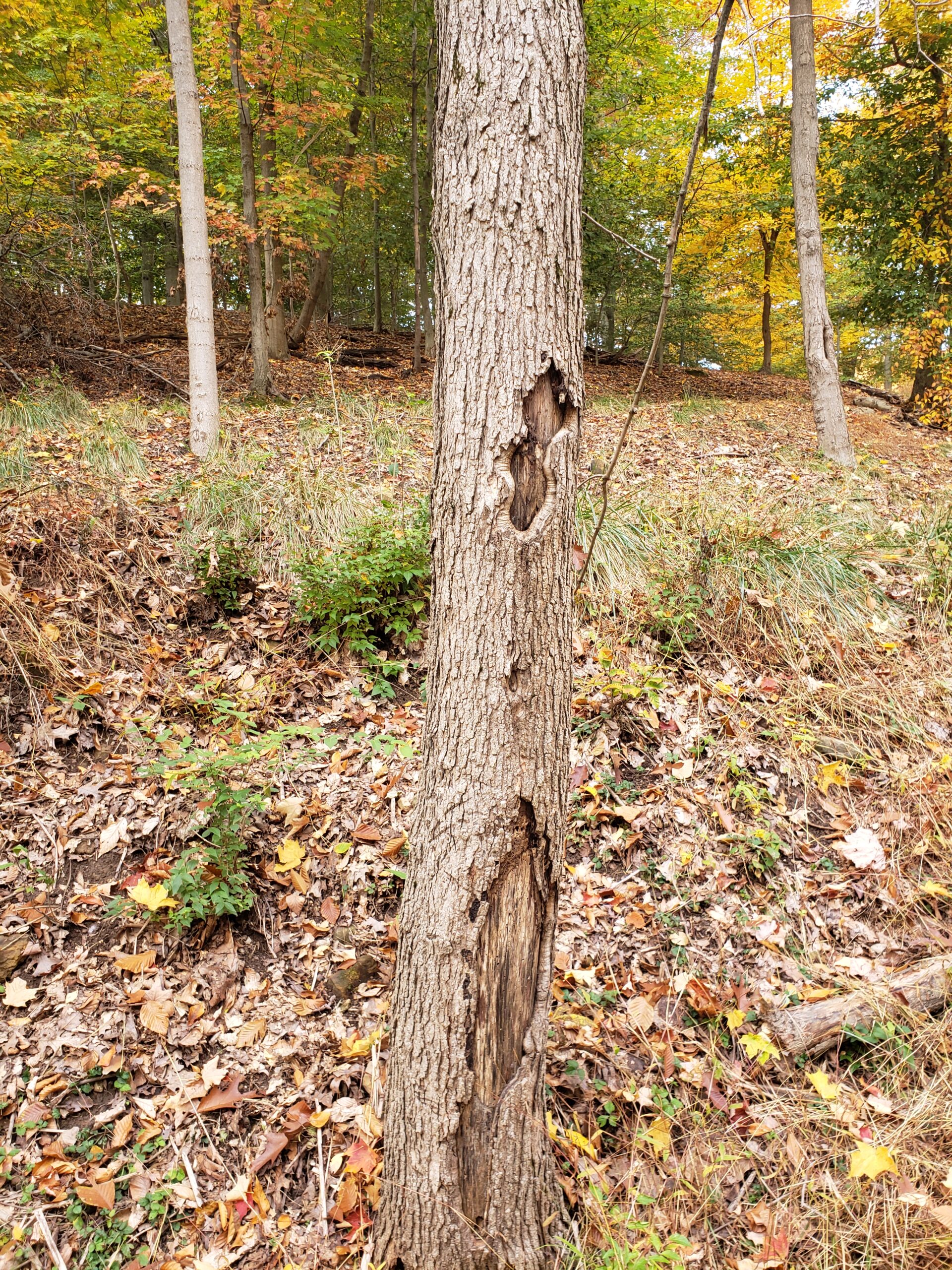
3. The Trees Are Too Old or Declining

Aging trees lose canopy density and root vigor. Less canopy = less evaporation. Less root activity = less water pulled from the soil. A tree can be large but no longer effective.
4. The Wet Area Is Bigger Than the Tree’s Root Zone

If the groundwater problem covers a wide area, a single tree—or even a few—may not be enough. Biodrainage works best with clusters of high‑water‑use species.

5. The Trees Are in the Wrong Location

If the wettest zone is in the back corner but the trees are planted near the house, they’re not accessing the saturated soil where the problem actually is.

6. The Soil Is Heavy Clay

Clay holds water like a sponge. Even thirsty trees struggle to keep up unless they’re species adapted to wet, compacted soils.

3. Space Plants Generously Crowded roots trap moisture. Give each plant enough room to breathe so water can move through the soil instead of pooling around stems.

7. The Groundwater Source Is Constant

If water is rising from below (not just from rain), typical landscape trees can’t keep pace. You need high‑transpiration, deep‑rooted species specifically chosen for biodrainage.

Wishing you smooth sailing as you work on draining your plot ofland — may everything flow exactly where it’s supposed to and leave your space ready for the next stage of your project. If you’ve tackled something similar or have tips to share, feel free to leave a comment below. I’d love to hear your experience and cheer you on.

Leave a Reply

Your email address will not be published. Required fields are marked *

Translate »