When Should a Biodrainage Tree Be Replaced to Maintain Effectiveness?
There is no fixed “expiration date” for biodrainage plants, but their effectiveness follows a predictable curve tied to age, canopy size, and root vigor. The goal is to replace a plant before its water‑use capacity declines.
Below is a practical guideline you can confidently use in Northeast Ohio landscapes.
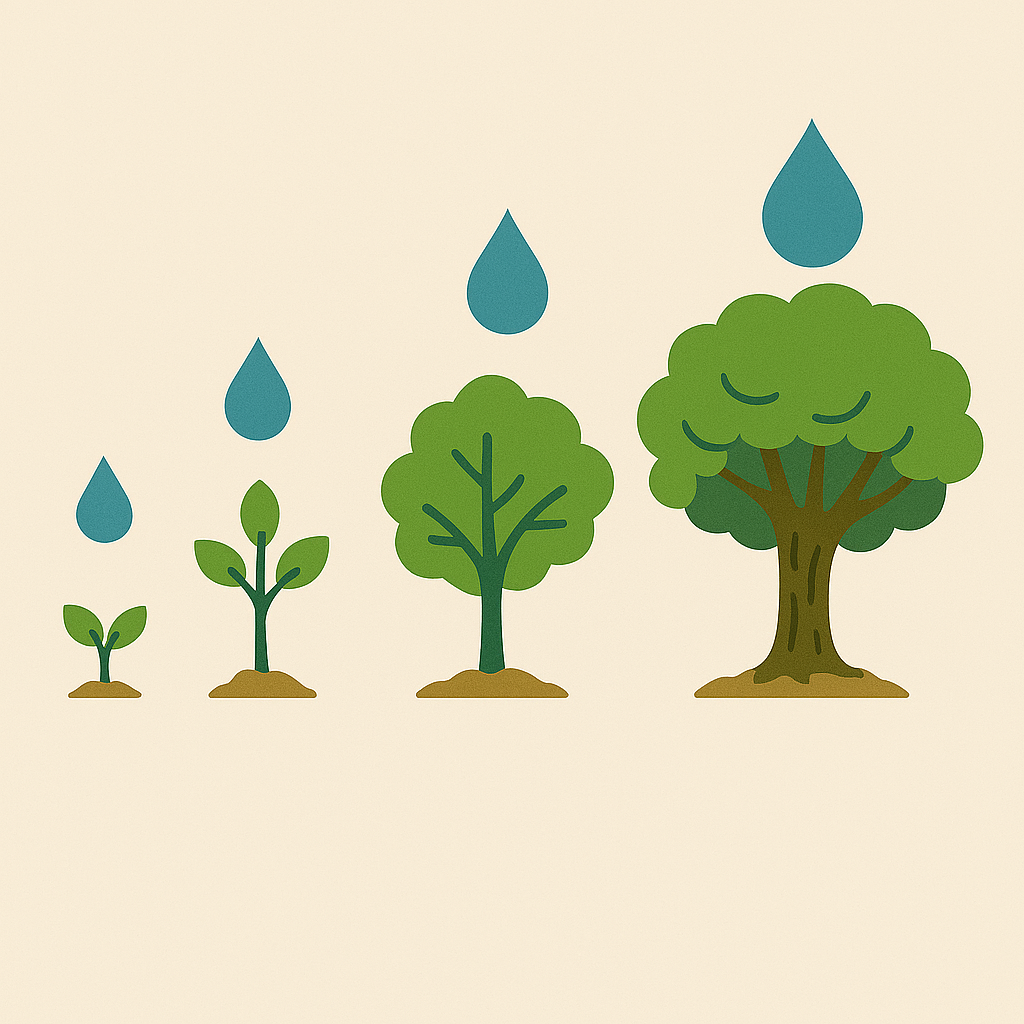
🌱 1. Young Phase (0–10 years)
Effectiveness: Increasing
Replace? No
Trees and shrubs are still expanding their root systems and canopy. Water uptake increases every year.
🌳 2. Peak Biodrainage Phase (10–30 years)
Effectiveness: Maximum
Replace? No
This is the “sweet spot.”
Most biodrainage species — river birch, willow, red maple, swamp white oak, hybrid poplar — hit their highest transpiration rates during this window.
- Canopy is large
- Roots are deep and active
- Water use is at its lifetime maximum
🍂 3. Declining Phase (30–50+ years)
Effectiveness: Gradually decreasing
Replace? Sometimes
As trees age, several things happen:
- Growth slows
- Canopy density decreases
- Root turnover increases
- Transpiration drops
- Disease and storm vulnerability rise
A tree in decline still moves water, but not nearly as aggressively as it did in its prime.
Replacement is advisable when:
- The canopy is thinning
- The tree shows chronic dieback
- Root rot or fungal issues appear
- The tree becomes structurally unsafe
- Groundwater problems return after years of stability
🪵 4. End‑of‑Life Phase (50–80+ years, species‑dependent)
Effectiveness: Low
Replace? Yes
At this stage, the tree is no longer a reliable biodrainage tool.
Removal and replanting restore the system’s effectiveness.
Species‑Specific Replacement Guidelines
These are practical, landscape‑tested ranges — not rigid rules.
Species
Peak Biodrainage Age
When to Consider Replacement
River Birch
10–35 yrs
35–50 yrs
Willows
5–25 yrs
20–30 yrs (short‑lived)
Hybrid Poplars
5–20 yrs
15–25 yrs (very short‑lived)
Red Maple
10–40 yrs
40–60 yrs
Swamp White Oak
15–50 yrs
50–80 yrs
Bald Cypress
15–60 yrs
60–100 yrs (very long‑lived)
Fast‑growing, high‑water‑use species (willow, poplar, birch) also age faster and lose effectiveness sooner. Slower growers (oak, cypress) provide longer‑term stability.
A Simple Rule of Thumb
Replace biodrainage trees when their canopy declines or when they reach the end of their natural fast‑growth phase — typically 25–40 years for birch, willow, and poplar, and 40–70 years for maple and oak. This keeps the system performing at its best.
Wishing you steady progress and smooth results as you work on draining the area—may everything fall into place just right so you can move confidently to the next stage. If you’ve faced something similar or have helpful tips, share them in the comments and join the conversation.
Manager
0