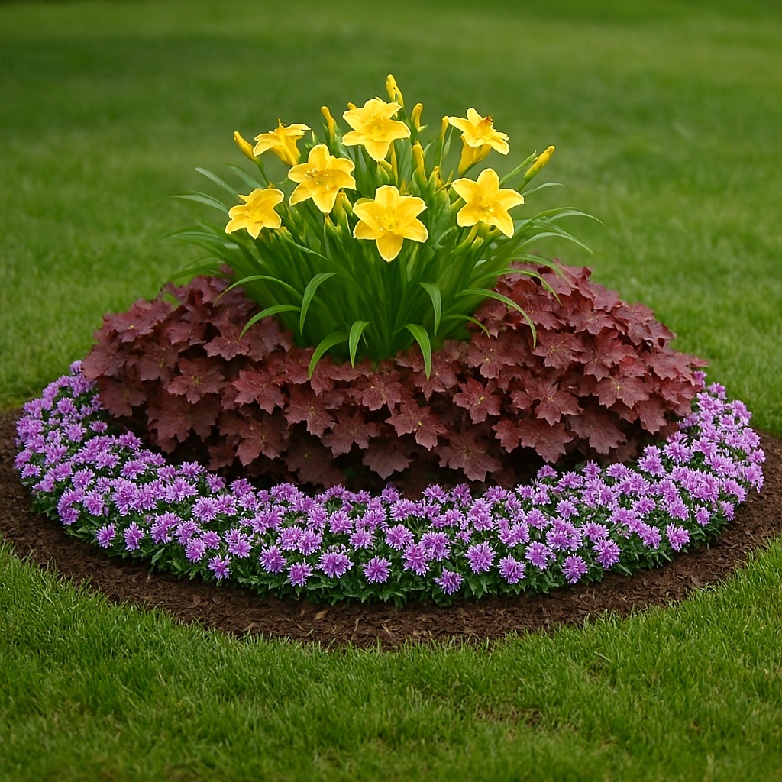
A former stump spot can become a showpiece flowerbed because the soil is loose, airy, and naturally mounded. The key is to work with the shape and history of the site rather than against it.

A raised, layered perennial bed is the most natural fit. The ground already sits slightly higher from the mulch and root grindings, so you can shape it into a soft dome or oval and plant in tiers. This creates a bed that looks intentional rather than like a patched over problem area.

What kind of flowerbed works best on a former stump site?

A raised, layered perennial bed is the most natural fit. The ground already sits slightly higher from the mulch and root grindings, so you can shape it into a soft dome or oval and plant in tiers. This creates a bed that looks intentional rather than like a patched over problem area.

Core idea: use the mound as a mini hill garden—tough perennials on top, moisture loving plants around the base, and a clean edge to frame it.
This design hides any remaining root wood, handles settling gracefully, and turns a once-problem area into a focal point.

🌼 Why this style works especially well after stump grinding.

Have you ever turned a stump spot into a flowerbed? I’d love to hear what you planted and how it turned out. Share your ideas or experiences in the comments — your story might inspire someone planning their own post‑stump makeover.
0 0 votes
Article Rating
Subscribe
Notify of
guest

0 Comments
Oldest
Newest Most Voted
Translate »
0
Would love your thoughts, please comment.x
()
x