Rules for planting plants to ensure good drainage.
1. Choose Plants That Love Moisture
Plant species adapted to wet soils first. They stabilize the area, drink deeply, and help restore balance while the rest of the yard dries out.
2. Elevate the Root Zone
Mound soil before planting to lift roots above soggy layers. This improves oxygen flow and prevents root suffocation in heavy, wet ground.
3. Space Plants Generously
Crowded roots trap moisture. Give each plant enough room to breathe so water can move through the soil instead of pooling around stems.
4. Improve Soil Structure
Mix in coarse organic matter or sand to loosen compacted soil. Better structure means faster drainage and healthier root development.
5. Plant on a Gentle Slope
A slight grade directs excess water away from trunks and crowns. Even a subtle slope helps prevent waterlogging after storms.
6. Avoid Planting in Depressions
Low spots collect water and drown roots. If you must plant there, choose high‑water‑use species or build a raised bed to lift the root zone.
7. Use Mulch Wisely
A thin mulch layer protects soil without trapping too much moisture. Keep mulch away from the trunk to prevent rot in wet conditions.
8. Match Planting Depth to Soil Type
Plant too deep and roots suffocate; too shallow and they dry out. Set the root flare at soil level to balance moisture and oxygen.
9. Combine Plants With Complementary Water Needs
Pair thirsty species with moderate users to create a balanced planting zone that naturally regulates moisture.
10. Prioritize Strong Root Systems
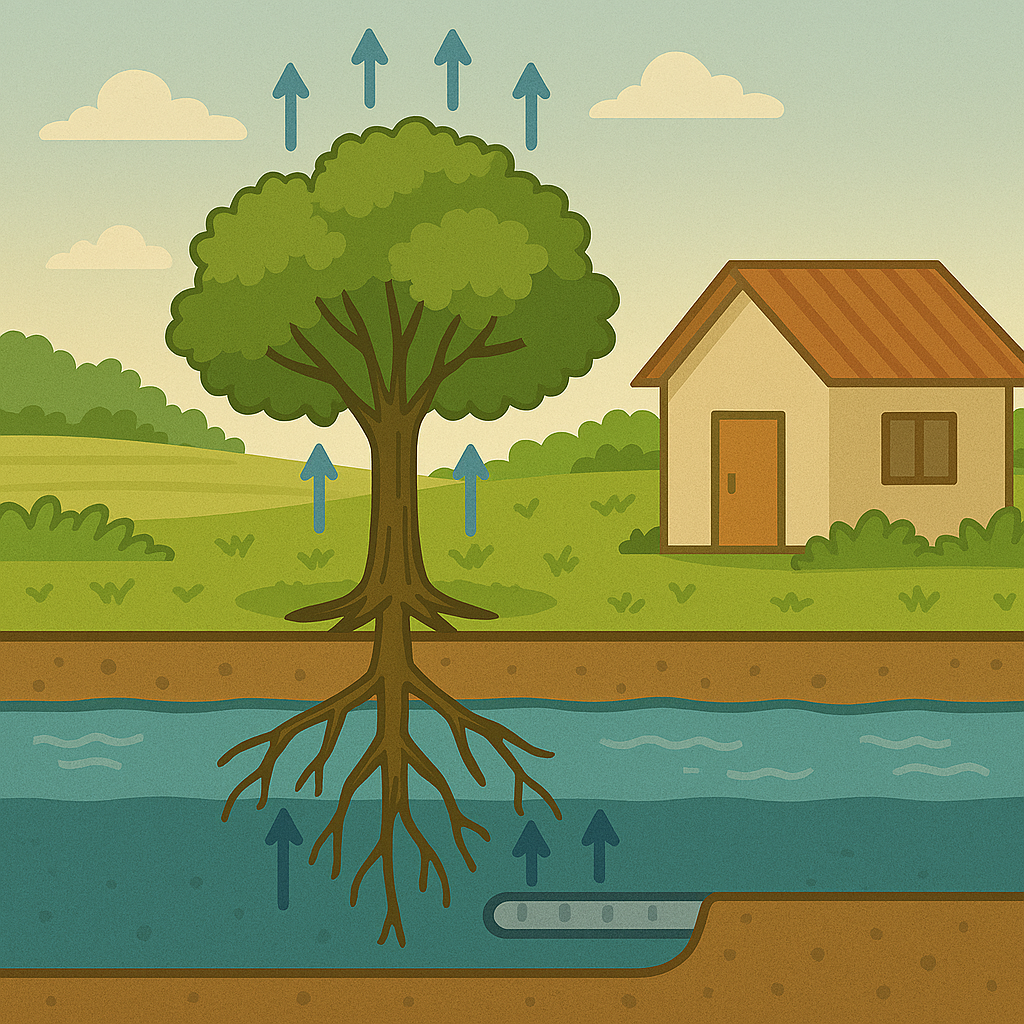
Choose plants known for vigorous, deep roots. They pull water downward, stabilize the soil, and support long‑term drainage improvement.