How to make compost from mulch left over from stump grinding?
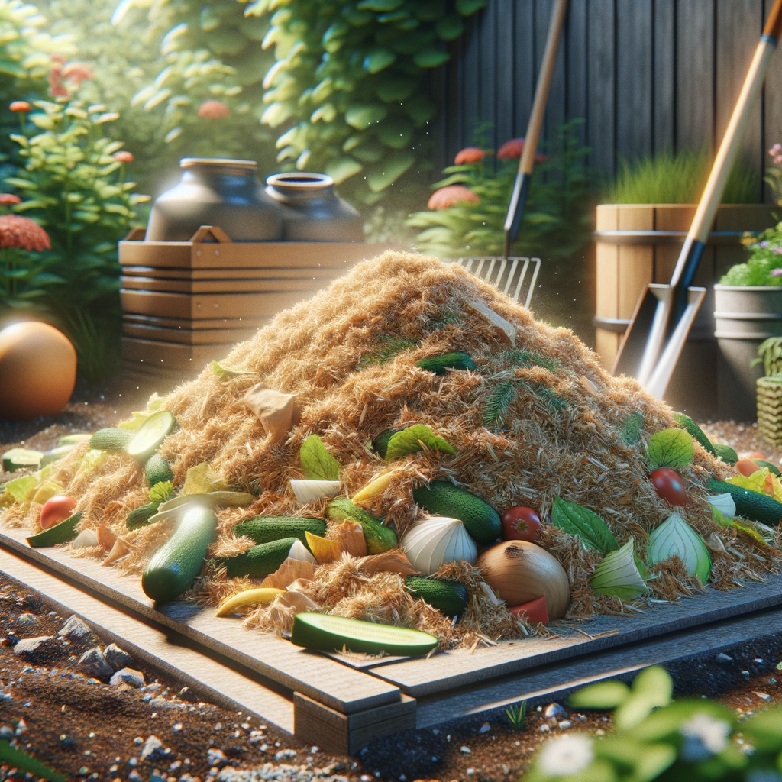
Sawdust is very high in carbon, so to make good compost you must balance it with nitrogen‑rich “greens” (like grass clippings, manure, or food scraps), keep the pile moist, and turn it regularly. Here are three practical recipes tailored for different gardening needs. —
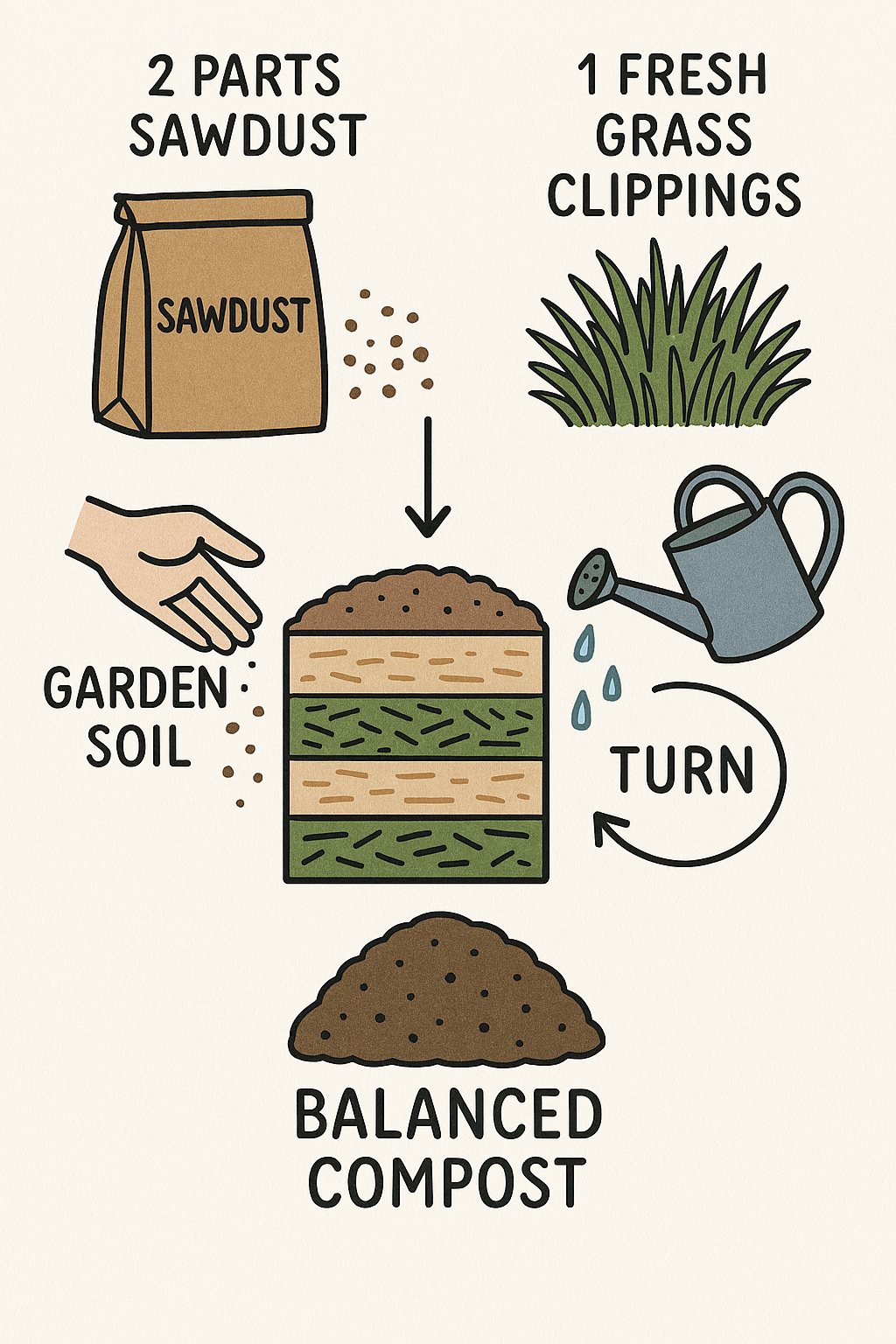
Recipe 1: Sawdust + Grass Clippings Compost
Ingredients: 2 parts sawdust (untreated, no chemicals). 1 part fresh grass clippings . A handful of garden soil (for microbes). Water as needed. Method: Layer sawdust and grass clippings in alternating thin layers. Sprinkle soil between layers to introduce decomposers. Keep the pile damp but not soggy. Turn weekly to aerate. Result: Balanced compost with good nitrogen content, ready in 3–4 months.
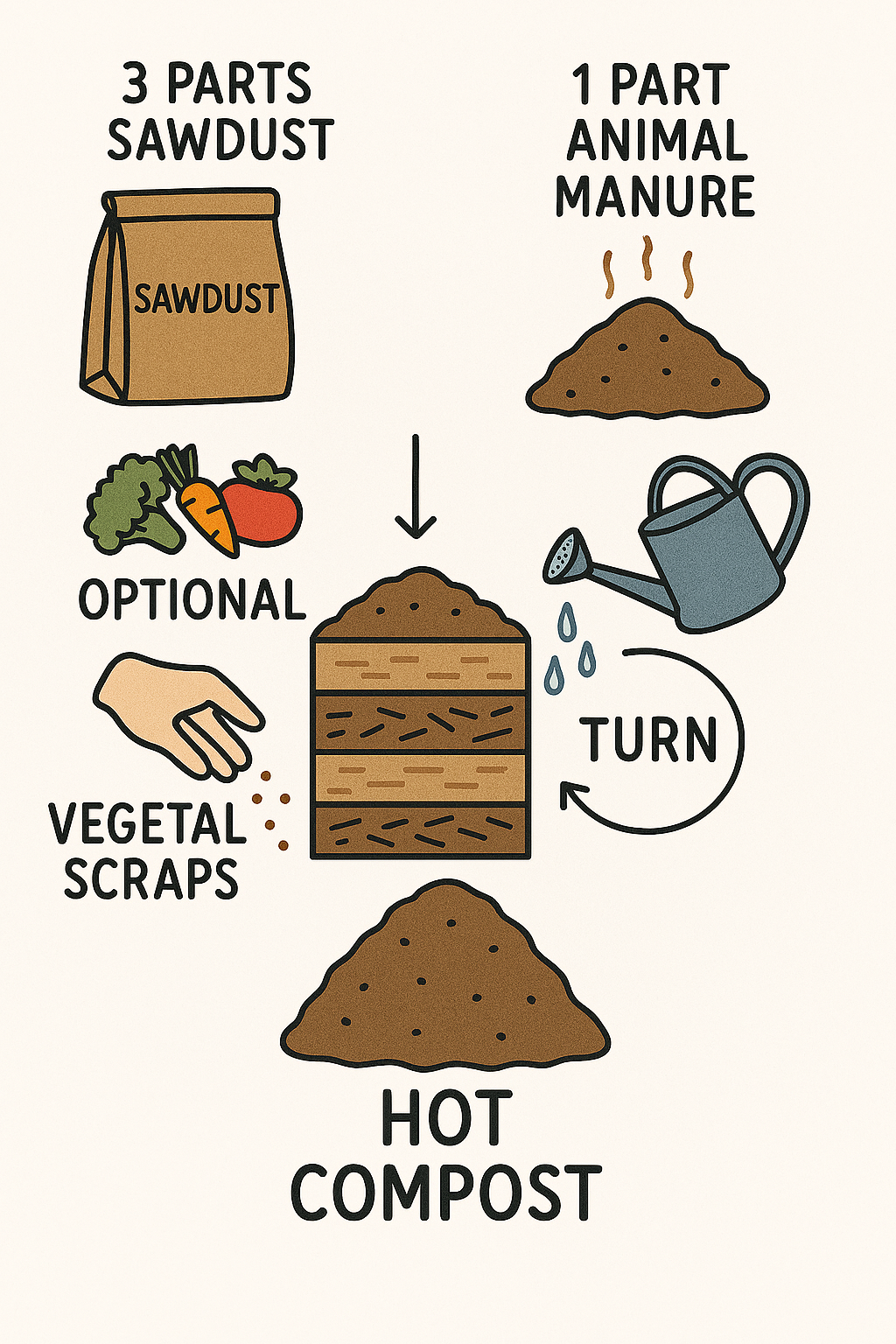
Recipe 2 Sawdust + Manure Hot Compost
Ingredients: 3 parts sawdust. 1 part animal manure (cow, horse, or chicken) . Optional: vegetable scraps for extra nitrogen. Method: Mix sawdust and manure thoroughly to avoid clumping. Build a pile at least 3 feet high to generate heat. Add water until the pile feels like a wrung‑out sponge. Turn every 2 weeks to keep oxygen flowing. Result: Hot compost that breaks down quickly, producing rich humus in 2–3 months.
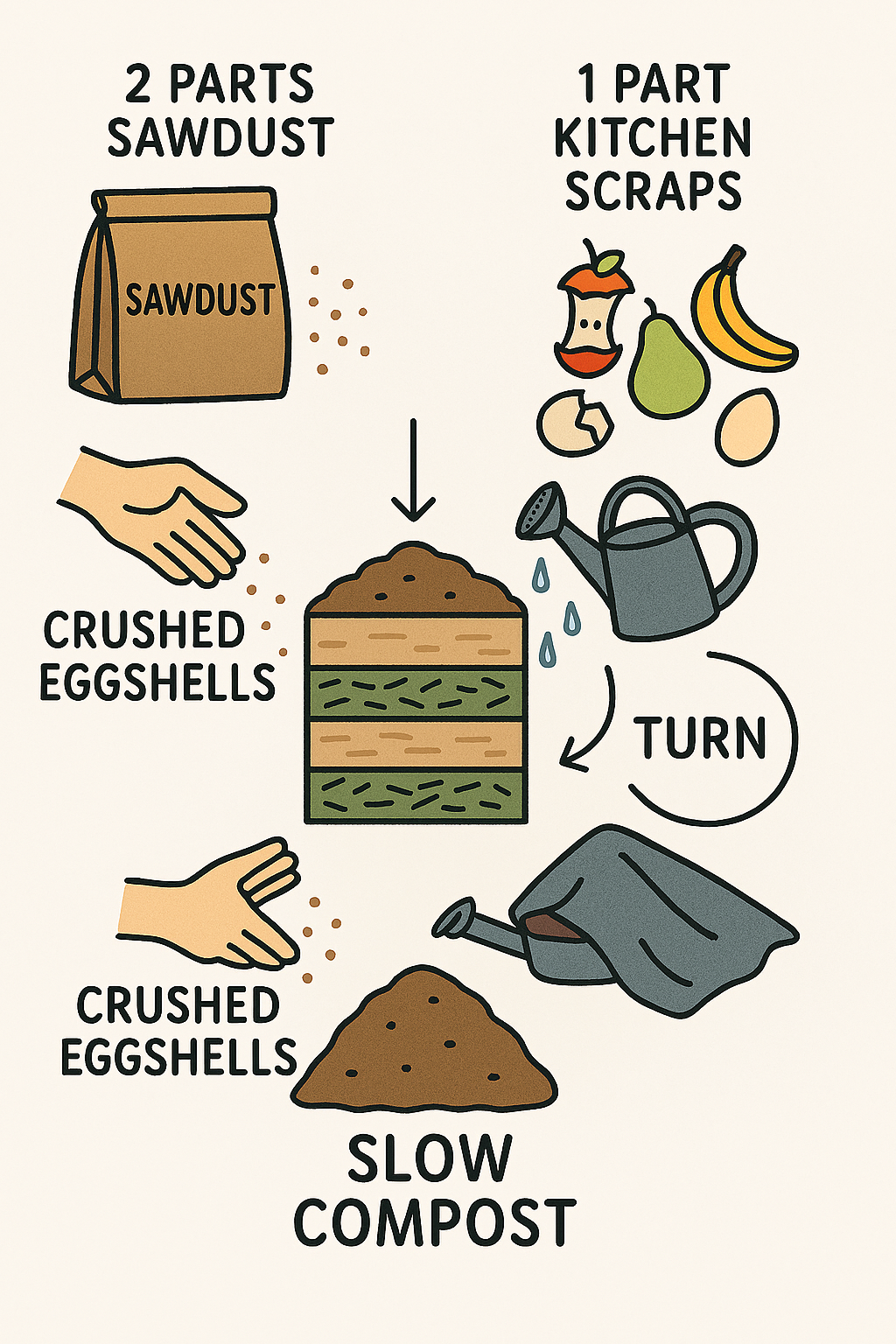
Recipe 3 Sawdust + Kitchen Scraps Slow Compost
Ingredients: 2 parts sawdust. 1 part kitchen scraps (fruit, vegetable peels, coffee grounds). Crushed eggshells for calcium. Method: Alternate layers of sawdust and kitchen scraps. Add water lightly to maintain moisture. Cover pile with tarp to retain heat and prevent drying. Turn monthly for aeration. Result: Slower composting (6–9 months) but yields nutrient‑rich soil amendment with balanced minerals.