• (216) 767-6323
  • office@juststumpit.com
  • OHIO

How to Get Rid of an Old Tree Stump?
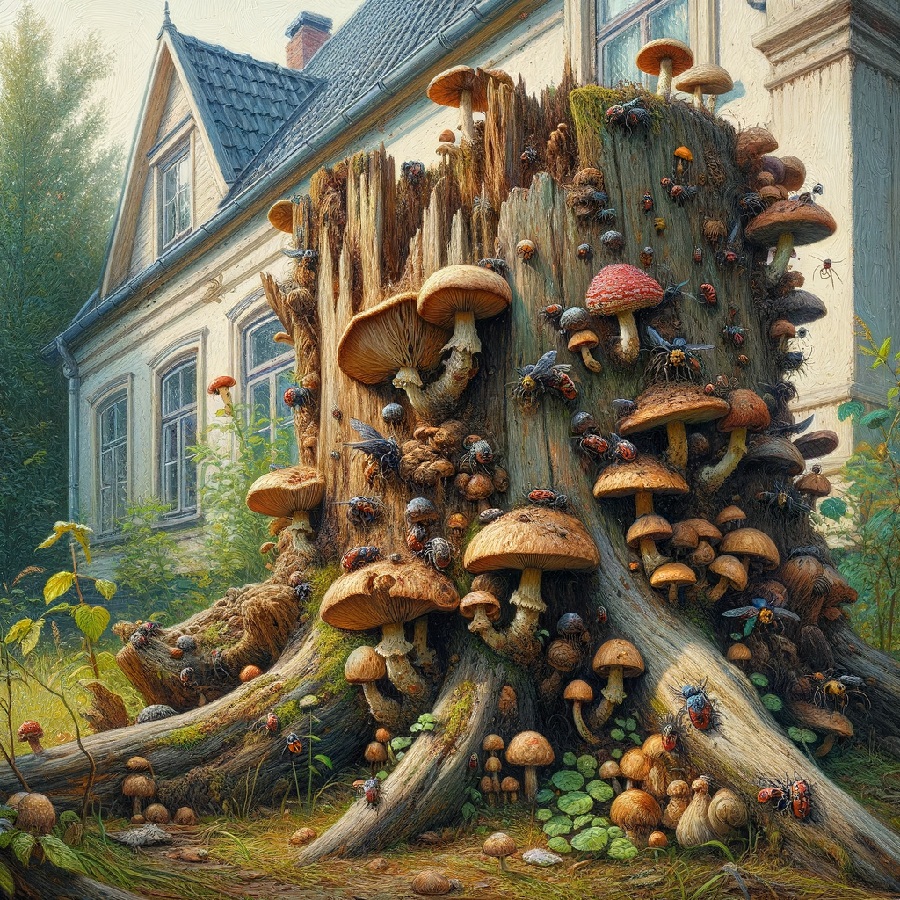
Is an old tree stump ruining the look of your yard? Here’s how to restore its former glory! 🌳 Why remove it at all? An old tree stump is not just an eyesore; it can be a tripping hazard, attract pests like termites, and prevent you from using that area of ​​land for gardening or landscaping.

Is an old tree stump ruining the look of your yard? Here’s how to restore its former glory!

Why remove it at all?
Removal Options:

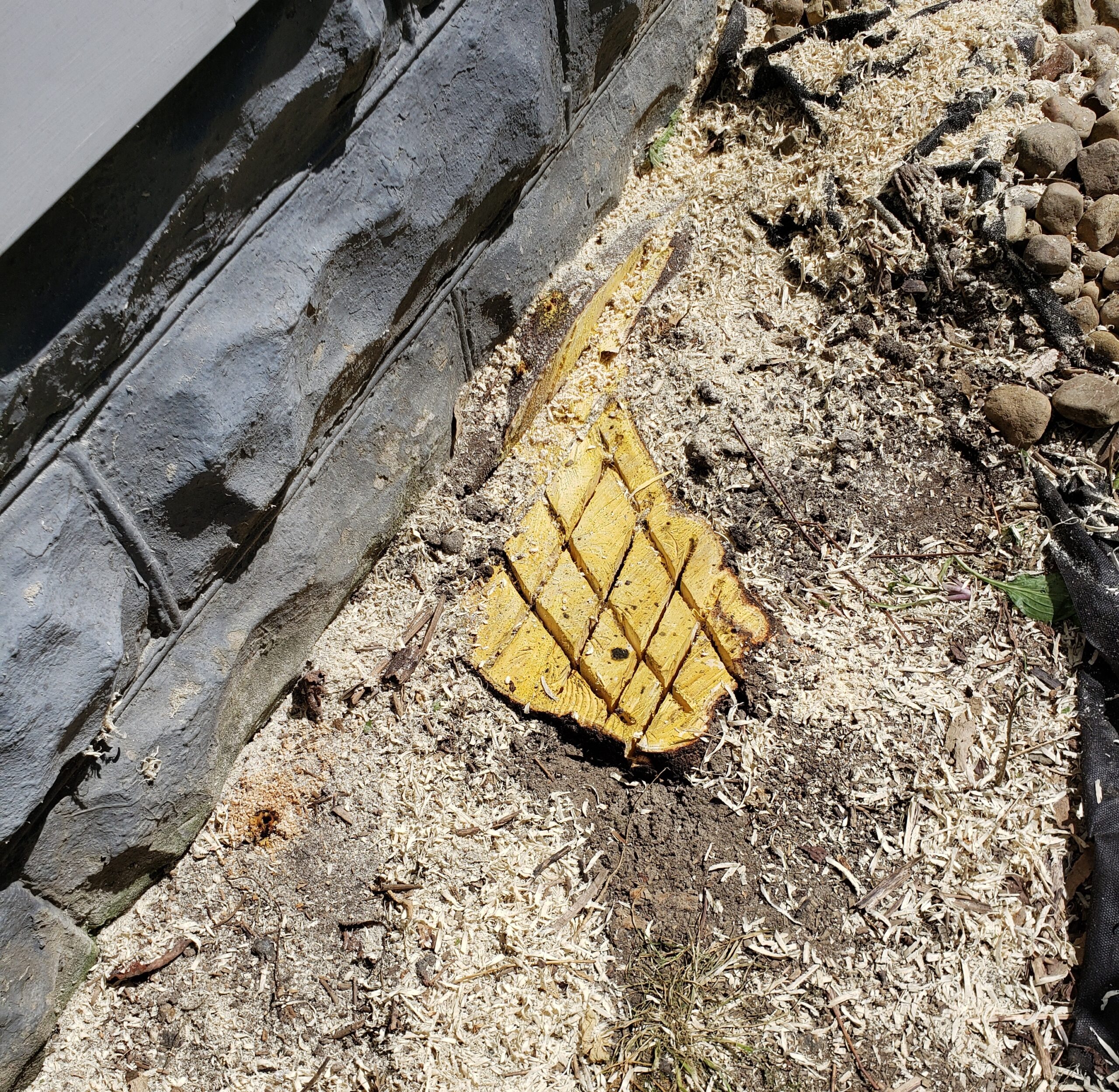
Drill holes in the stump, add a stump remover or even Epsom salt, and then let nature take its course. After a few weeks or months, the wood will soften, and the stump will be easier to remove. If you know how to use a drill and can handle an axe, you can try this. Be prepared for all vegetation within a 1.5-yard radius to die, and nothing will grow in that spot for a long time.

Chemical removal:

Drill holes in the stump, add a stump remover, a herbicide like the one pictured, or even Epsom salt, and then let nature take its course. After a few weeks or months, the wood will soften, and the stump will be easier to remove. If you know how to use a drill and an axe, you can try this method. Be prepared for all vegetation within a 1.5-meter radius to die, and nothing will grow in that spot for a long time.
Natural decomposition:

If you are patient, you can let the stump rot naturally by keeping it moist and covered with soil. Environmentally friendly, but very slow.

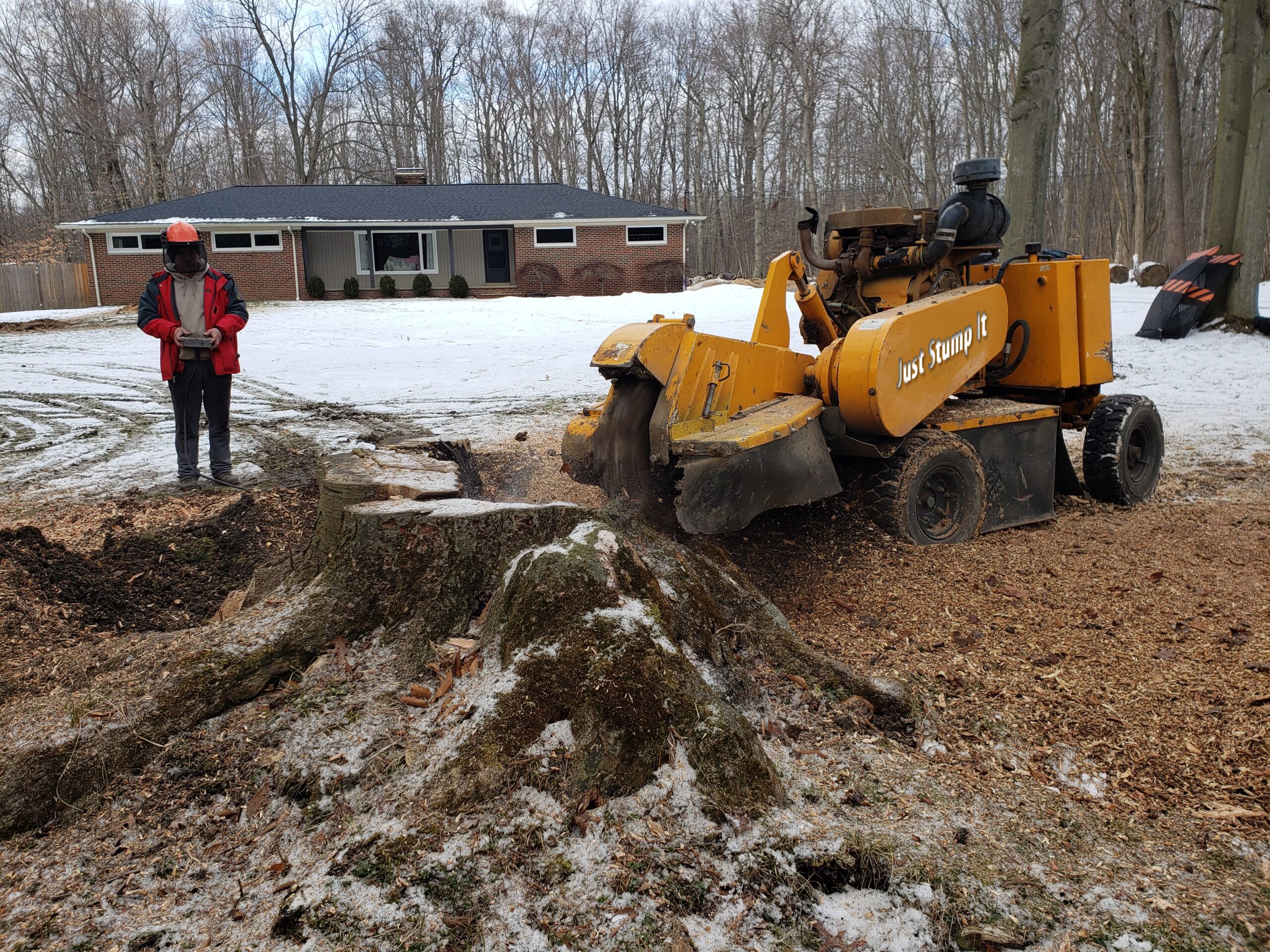
Clearing out the old to make way for new growth—even in the heart of winter. Winter stump grinding.

Stump Grinding

A faster option if you need immediate results. It will turn the stump into mulch in a few hours. For large or difficult-to-remove stumps, professional removal will save time and ensure safety.

Professional Tip:

On our website you will find a way to quickly restore your lawn, useful tips on how to plant another tree so that it grows healthy and strong, and what to do with the mulch after grinding the stump.

Report It: Protect Ohio Trees From Dangerous Invasive Pests.

Report It: Protect Ohio Trees From Dangerous Invasive Pests. Ohio’s trees face growing pressure from invasive insects and pathogens that can weaken neighborhoods, damage ecosystems, and create hazardous deadwood. Some of these pests are already here. Others — like the European chestnut moth — have devastated trees overseas and could threaten our buckeyes if introduced. Early reporting is one of…

Read More

A Comparison of Biodrainage with Other Site Drainage Solutions.

Managing excess water in residential landscapes—especially in clay heavy regions like Northeast Ohio—often leads homeowners to engineered solutions like French drains, sump pumps, catch basins, or regrading. These drainage systems types can be effective, but they all share one limitation: they move water rather than remove it. Biodrainage offers a fundamentally different approach. Instead of relying on pipes or pumps,…

Read More

Biodrainage Explained: A Complete Guide to Natural Water Management for Wet Yards and High Water Tables.

Biodrainage is becoming one of the most effective and sustainable solutions for homeowners dealing with wet yards, standing water, clay soil drainage issues, and high water tables. Unlike French drains or sump pumps, biodrainage uses trees and shrubs to remove excess water naturally through transpiration. If you’re searching for how biodrainage works, best trees for biodrainage, or natural drainage solutions…

Read More
0 0 votes
Article Rating
Subscribe
Notify of
guest

0 Comments
Oldest
Newest Most Voted
Translate »
0
Would love your thoughts, please comment.x
()
x