• (216) 532-9138
  • office@juststumpit.com
  • OHIO

Biodrainage will help prevent your basement from turning into a swimming pool.
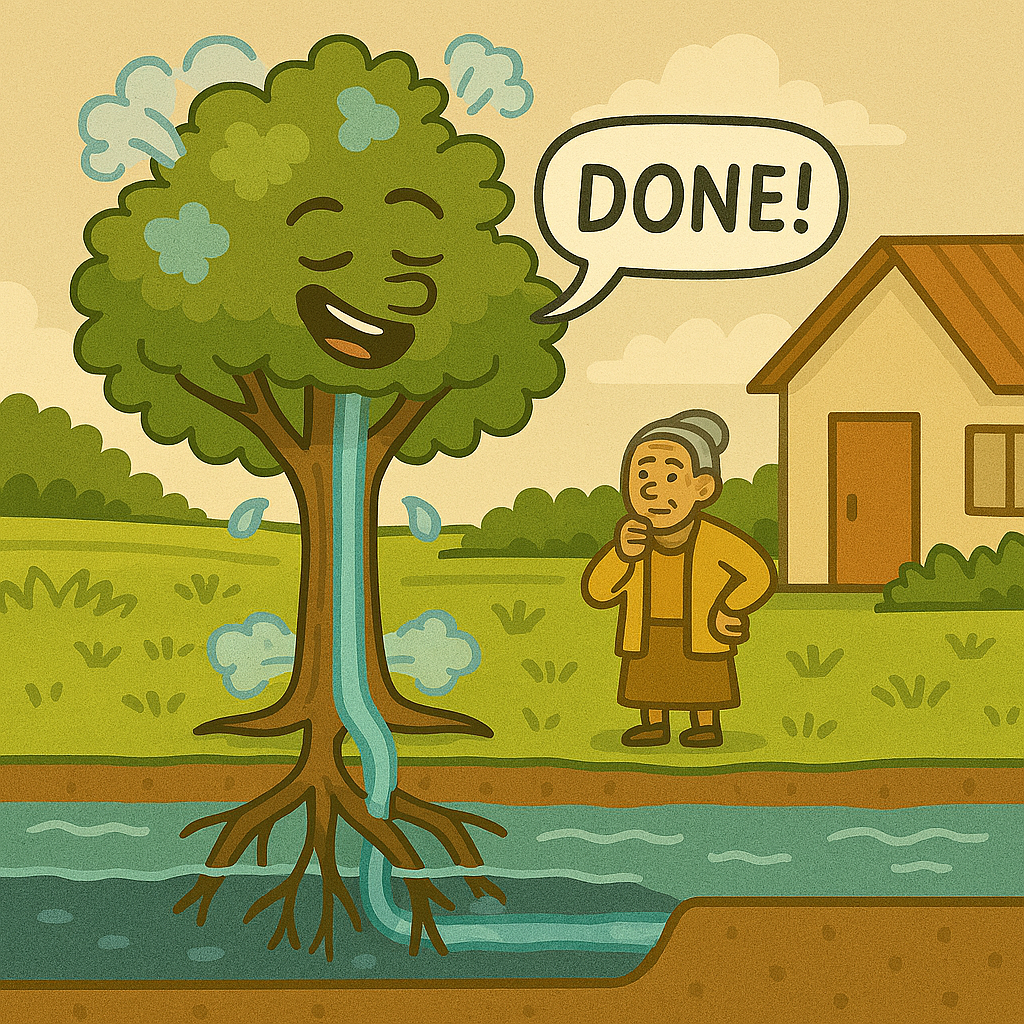
Marv drank and drank until he felt like a giant wooden straw stuck in a giant muddy milkshake. The water rushed up his trunk like it was late for a meeting, shot into his leaves, and *poof* — evaporated into the sky like it had somewhere better to be.
A Beautiful Landscape That Quietly Solves Your Water Problems. High groundwater quietly destroys a yard—soils stay soggy, grass struggles, and low spots never dry. Roots suffocate, lawns compact, and whole areas become unusable. Homeowners start asking:
Biodrainage solves these issues naturally by using deep‑rooted plants to pull excess moisture from the soil.

Biodrainage: A Natural Solution for Managing High Groundwater and Wet Soils

Excess groundwater is one of the most frustrating problems for homeowners. Soggy lawns, standing water, compacted clay, and unusable yard space can make even the most beautiful property feel like a swamp. While French drains and engineered systems have their place, many landscapes benefit from a quieter, greener solution: biodrainage.
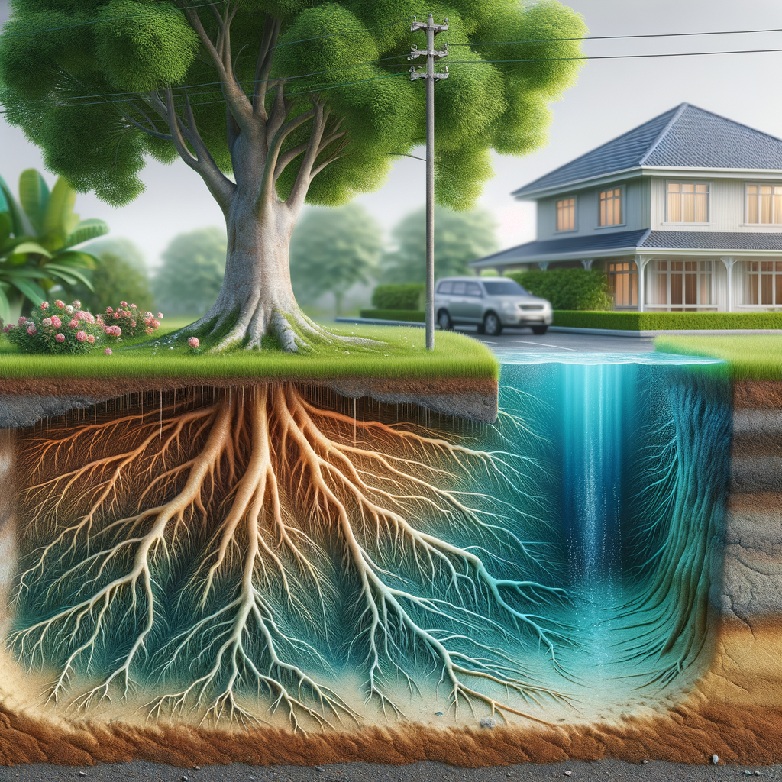
Trees are unmatched in their ability to move water. A single mature, high‑water‑use tree can evaporate **tens of gallons of water a day** through its leaves. No pump, pipe, or drain works as quietly or as continuously. Their deep roots pull moisture from saturated soil, and their broad canopies release it back into the air — turning excess groundwater into clean vapor. This natural process is why biodrainage succeeds where traditional drainage systems often fall short.

Biodrainage uses the natural water‑pumping power of trees and shrubs to lower groundwater levels, dry out saturated soils, and restore healthy yard conditions.

When designed well, it becomes a long‑term, low‑maintenance system that also beautifies the property.
What Is Biodrainage?

Biodrainage is the process of using deep‑rooted, high‑transpiration plants to remove excess water from the soil. As trees and shrubs pull water through their roots and release it through their leaves, they act like living pumps—reducing soil moisture, improving drainage, and stabilizing the landscape.

How Biodrainage Works?

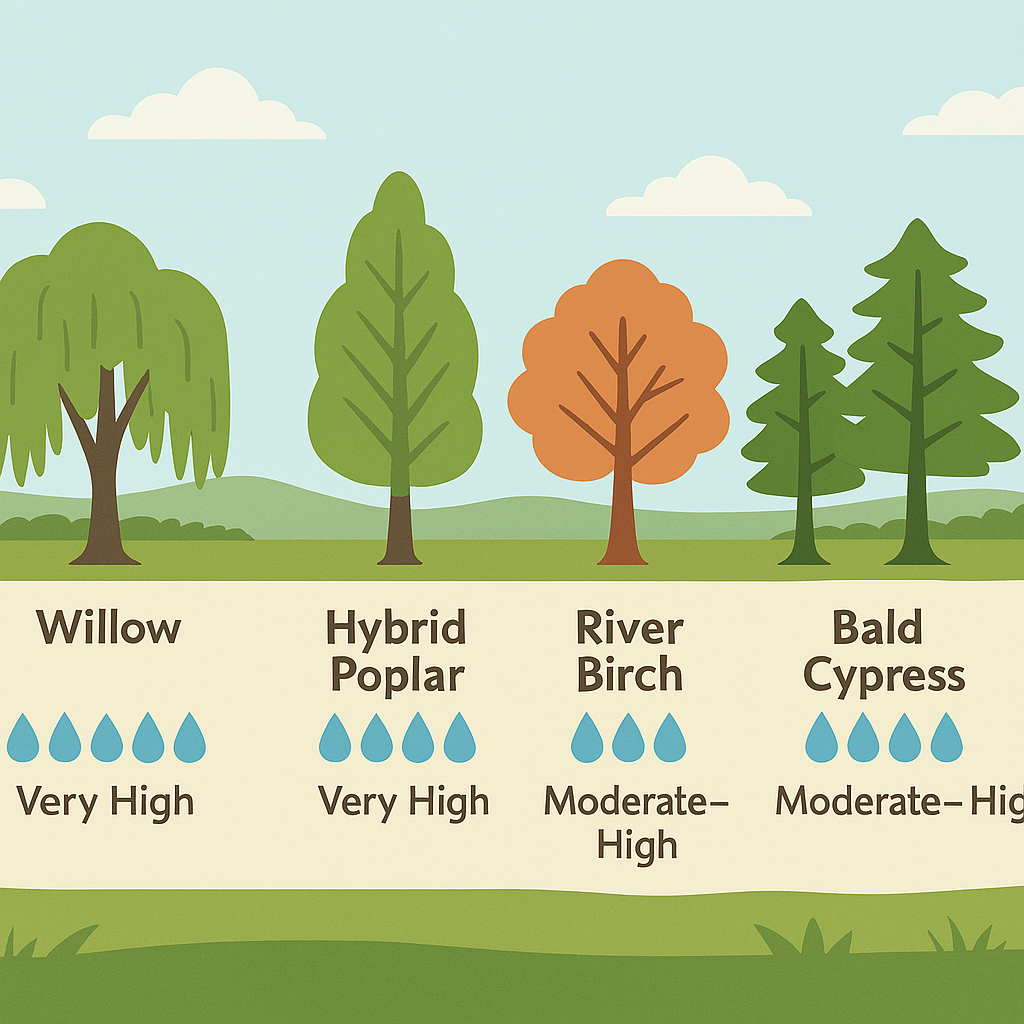
Which Trees in Cleveland Evaporate the Most Water?

Plants move water through a process called transpiration. The more leaves a plant has and the deeper its roots grow, the more water it can pull from the soil.

Three factors determine how effective a plant is at biodrainage:

1. Root Depth

Deep roots access groundwater and saturated subsoil layers.

2. Canopy Size

A larger canopy = more leaves = more water evaporated into the air.

3. Species Water‑Use Rate

Some species naturally use far more water than others.

Together, these traits allow certain trees and shrubs to significantly reduce soil moisture and lower groundwater levels over time.

Wishing you success as you tackle those high groundwater levels—may your yard stay dry and your plans go smoothly! If you’ve dealt with soggy soil or found a clever solution, we’d love to hear about it. Drop a comment and share your experience!

Tags :

Leave a Reply

Your email address will not be published. Required fields are marked *

Translate »