• (216) 532-9138
  • office@juststumpit.com
  • OHIO

Best Trees for Biodrainage (Northeast Ohio‑Friendly)
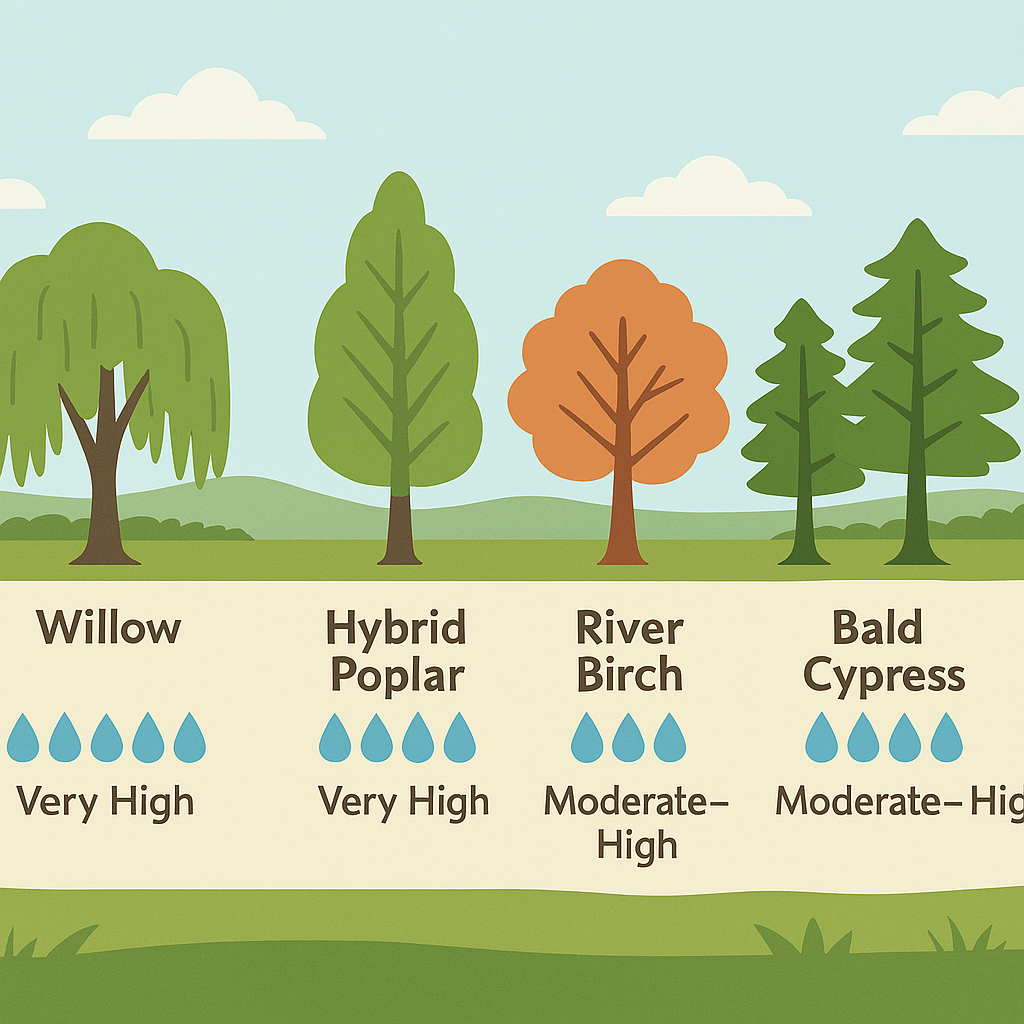
Trees are unmatched in their ability to move water. A single mature, high‑water‑use tree can evaporate **tens of gallons of water a day** through its leaves. No pump, pipe, or drain works as quietly or as continuously. Their deep roots pull moisture from saturated soil, and their broad canopies release it back into the air — turning excess groundwater into clean vapor. This natural process is why biodrainage succeeds where traditional drainage systems often fall short.

These species combine high water use with strong ornamental value—perfect for homeowners who want beauty and function.

These species combine high water use with strong ornamental value—perfect for homeowners who want beauty and function.

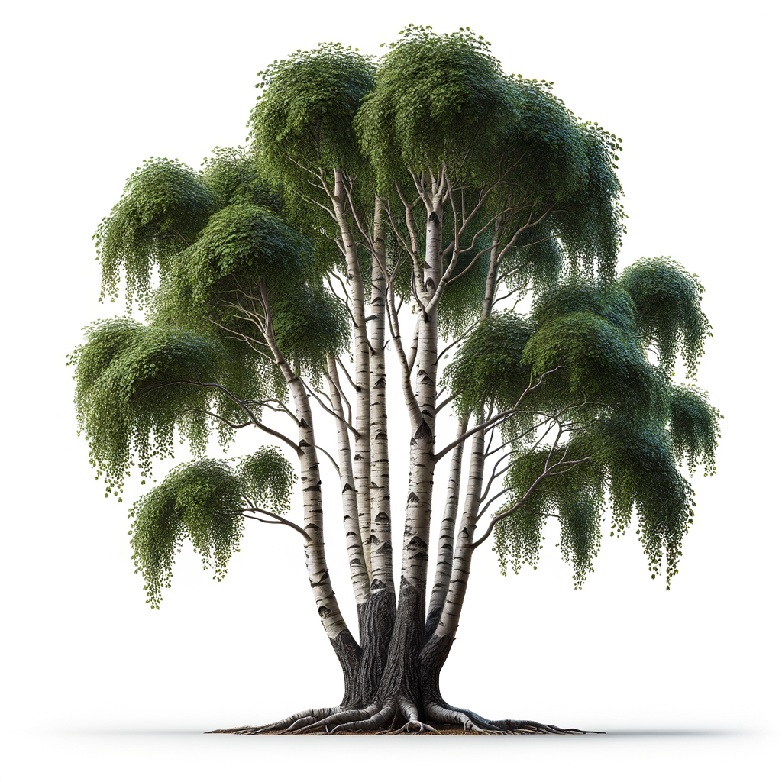
1. River Birch (Betula nigra)

High water use. Thrives in wet clay. Attractive peeling bark. Excellent for low areas.
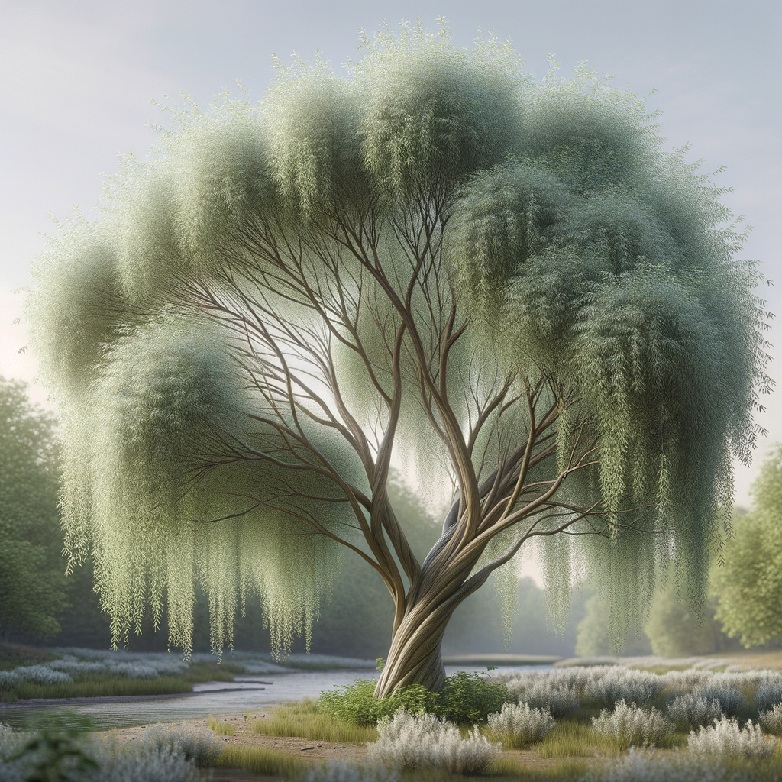
2. Black or White Willow (Salix nigra, Salix alba)

- Extremely high water use - Fast‑growing - Ideal for severe wetness - Plant away from pipes and foundations

Trees are unmatched in their ability to move water. A single mature, high‑water‑use tree can evaporate **tens of gallons of water a day** through its leaves. No pump, pipe, or drain works as quietly or as continuously. Their deep roots pull moisture from saturated soil, and their broad canopies release it back into the air — turning excess groundwater into clean vapor. This natural process is why biodrainage succeeds where traditional drainage systems often fall short.

3. Bald Cypress (Taxodium distichum)

Handles standing water. Deep, stabilizing roots. Soft, feathery foliage.

Trees are unmatched in their ability to move water. A single mature, high‑water‑use tree can evaporate **tens of gallons of water a day** through its leaves. No pump, pipe, or drain works as quietly or as continuously. Their deep roots pull moisture from saturated soil, and their broad canopies release it back into the air — turning excess groundwater into clean vapor. This natural process is why biodrainage succeeds where traditional drainage systems often fall short.

4. Red Maple (Acer rubrum)

Strong transpiration in warm months. Tolerates clay and flooding. Brilliant fall color.

Trees are unmatched in their ability to move water. A single mature, high‑water‑use tree can evaporate **tens of gallons of water a day** through its leaves. No pump, pipe, or drain works as quietly or as continuously. Their deep roots pull moisture from saturated soil, and their broad canopies release it back into the air — turning excess groundwater into clean vapor. This natural process is why biodrainage succeeds where traditional drainage systems often fall short.

5. Swamp White Oak (Quercus bicolor)

Deep roots once established. Long‑lived and stable. Excellent for large properties.

Trees are unmatched in their ability to move water. A single mature, high‑water‑use tree can evaporate **tens of gallons of water a day** through its leaves. No pump, pipe, or drain works as quietly or as continuously. Their deep roots pull moisture from saturated soil, and their broad canopies release it back into the air — turning excess groundwater into clean vapor. This natural process is why biodrainage succeeds where traditional drainage systems often fall short.

6. Hybrid Poplars (Populus hybrids)

Extremely fast growth. Very high water uptake. Best for quick results.

Wishing you great success with your landscaping project—may your ideas flourish and your soil cooperate! If you’ve tackled similar challenges or have tips to share, we’d love to hear from you. Leave a comment and join the conversation!
Tags :

Leave a Reply

Your email address will not be published. Required fields are marked *

Translate »