The hidden problem beneath a “quick grind”
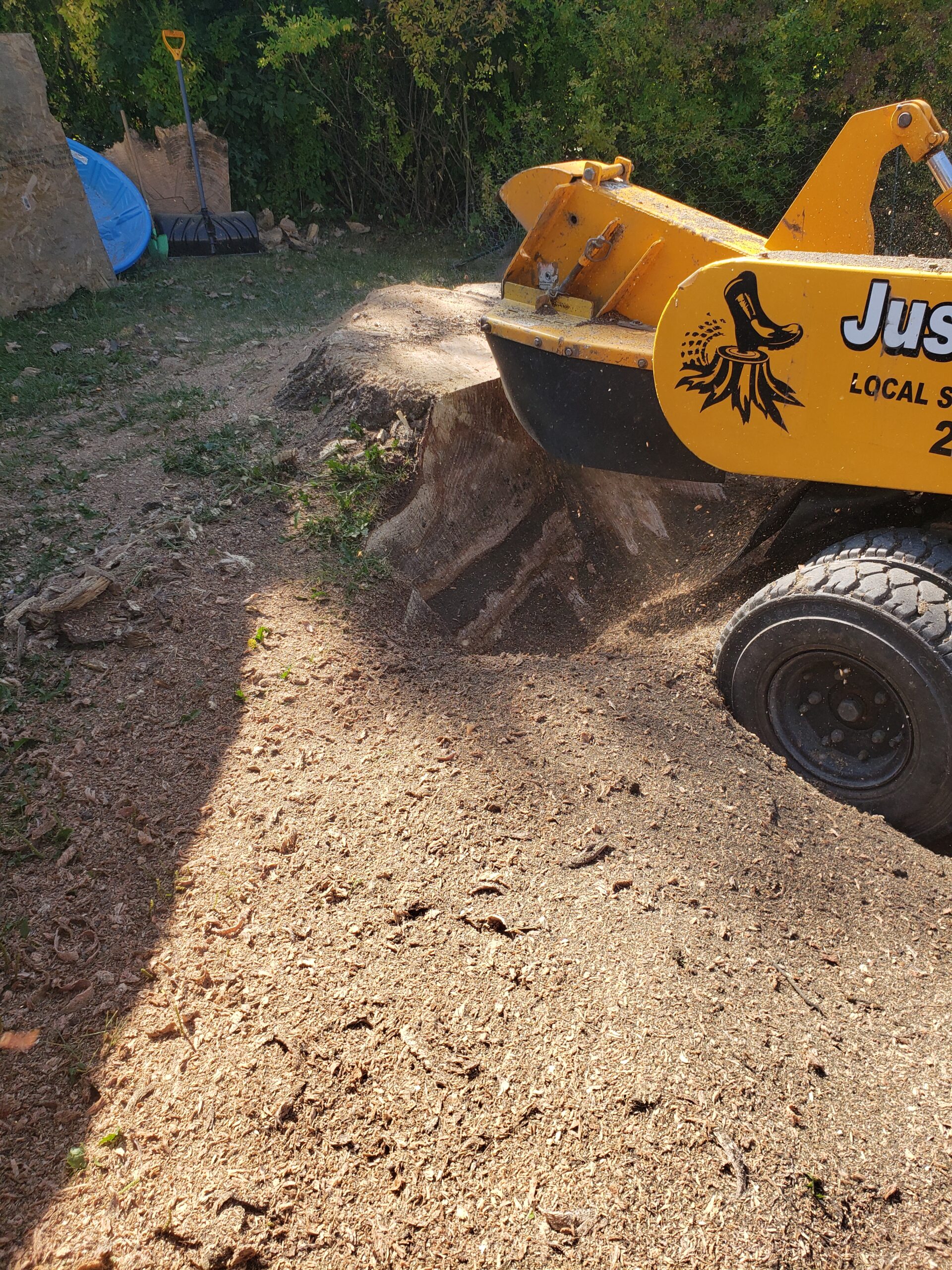
Some companies will happily grind just the top of the stump because it’s fast, easy, and profitable. But stopping at the surface leaves behind:
- A dense tangle of thick, woody roots stretching yards from the stump.
- A buried web of wood that can take years—sometimes a decade—to fully break down.
- A stubborn barrier that blocks grass roots, garden beds, and new plantings from taking hold.
- A future sinkhole as all that wood eventually rots and collapses.

From the lawn’s perspective, it’s like trying to grow on top of a wooden mattress.
🌱 Would anything grow on that wood?
Not well. Grass and most plants struggle because:
- Wood takes nutrients from the soil as it decomposes, leaving the seedling without enough nutrition to grow healthy.
- The root mass is dry, compact, and oxygen-poor, making it hard for new roots to penetrate.
- Water drains unevenly around old roots, causing patchy, weak growth.
- The area becomes a mushroom magnet, since fungi are the only things that love decaying wood.
Why we grind the whole system, not just the stump
When we take the time to grind the stump and the surrounding root flare, we’re removing the real obstacle.
That’s what gives you:
– Soil that’s ready for grass or planting
– No surprise sprouts popping up months later
– No long-term settling or soft spots
– A clean slate instead of a buried problem
It’s the difference between “looks good today” and “actually works for years.”
Manager
0