🌧️ Why Spring Moisture Becomes a Problem
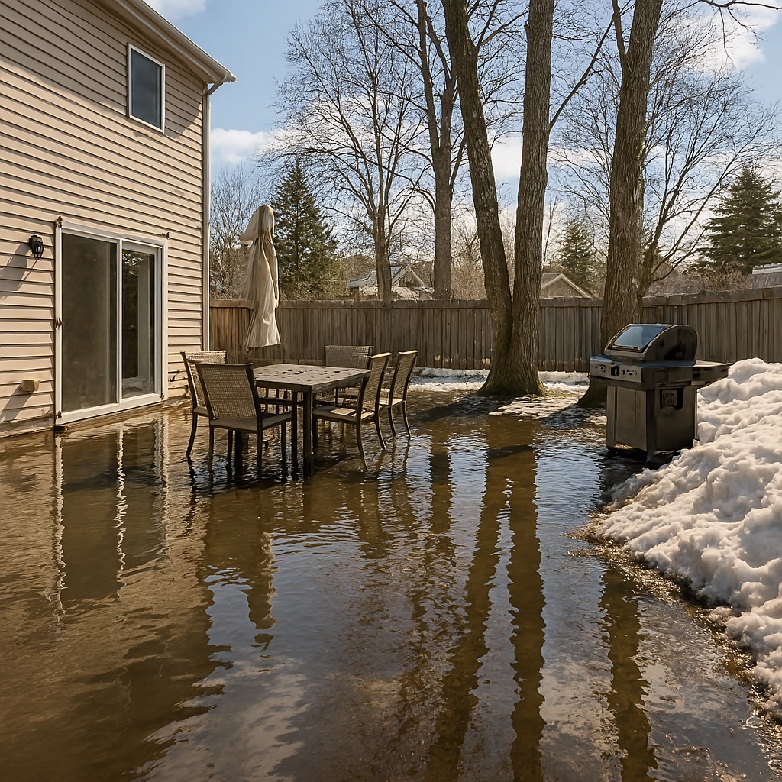
Spring is the season when every source of water arrives at once. Melting snow, saturated clay soil, and back to back rainstorms overwhelm the ground. When the soil can’t absorb any more, water spreads across the yard and begins pushing toward the foundation.
Cold, compacted soil absorbs water slowly.
– Heavy clay holds water instead of letting it drain.
– Rising groundwater pushes moisture upward from below.
This combination creates the perfect conditions for soggy lawns, standing water, and damp basements.
🏡 How Yard Flooding Leads to Basement Dampness
Water doesn’t stay politely in the yard.
Once the soil around the home becomes saturated, moisture begins pressing against the foundation.
– Hydrostatic pressure forces water into cracks and joints.
– Wet soil against the foundation increases humidity inside the basement.
– Persistent pooling near the house keeps the foundation damp for weeks.
Even homes with gutters, downspouts, and sump pumps can struggle when the soil itself is oversaturated.
🌱 What Biodrainage Is—and Why It Works
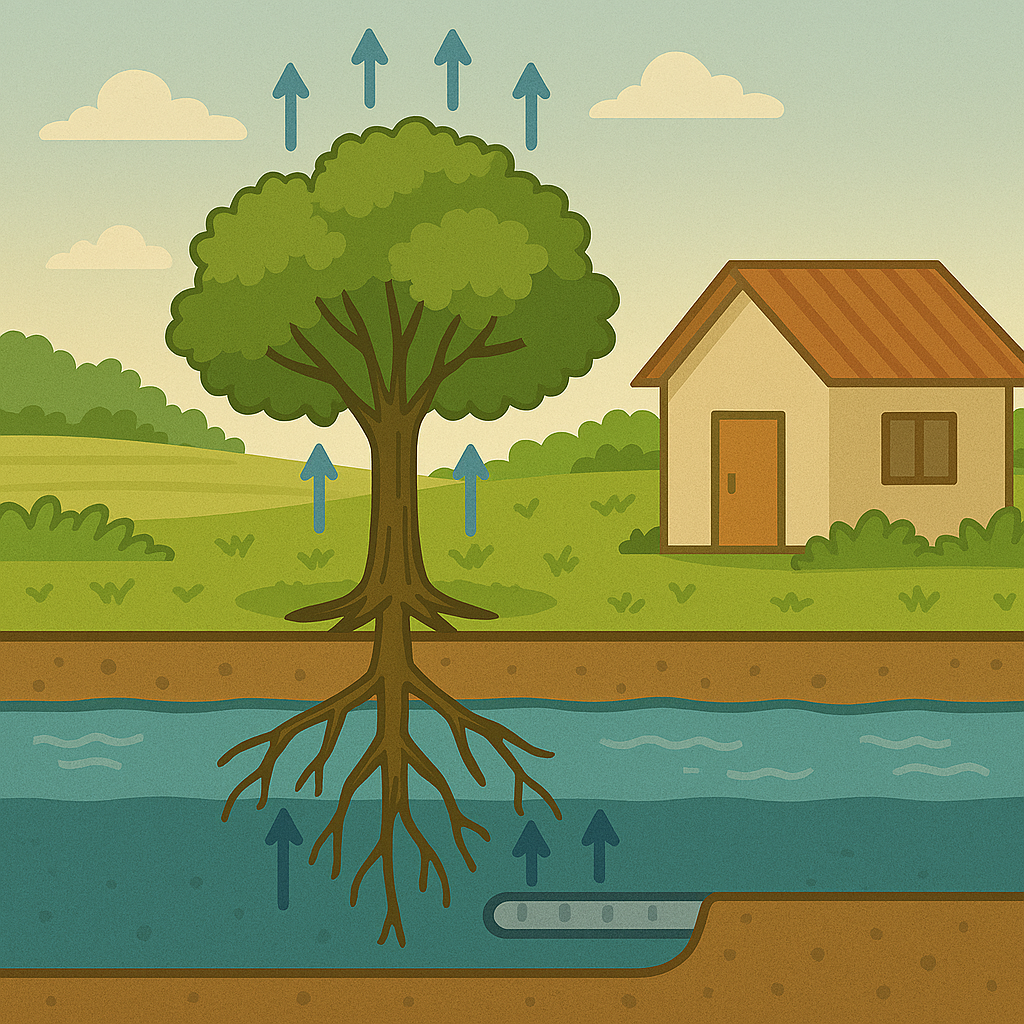
Biodrainage uses plants with high water demand to remove excess moisture from the soil through evapotranspiration. These plants act like living pumps, pulling water upward and releasing it into the air.
– Deep roots reach moisture that sits below the surface.
– High water use species remove large volumes of water naturally.
– Root systems improve soil structure, creating channels for better infiltration.
Instead of forcing water away with pipes or pumps, biodrainage reduces the amount of water in the soil itself.
🌳 How Biodrainage Reduces Spring Flooding
Strategically placed biodrainage plantings help the yard dry out faster and stay drier longer.
– Trees and shrubs absorb water before it becomes runoff.
– Root systems stabilize wet areas, preventing soil collapse and puddling.
– Moisture is pulled from deeper layers, lowering the overall saturation level.
This is especially effective in areas that flood every spring, such as low spots, former stump zones, and the downhill side of a yard.
🧱 How Biodrainage Helps Prevent Damp Basements
When the soil around the home stays drier, the foundation stays safer.
– Less water in the soil means less pressure on the foundation.
– Dryer soil reduces seepage through cracks and joints.
– Moisture is redirected away from the home, lowering the risk of mold and musty odors.
Biodrainage doesn’t replace gutters or grading—but it strengthens the entire system by reducing the amount of water the soil holds.
🌿 Where Biodrainage Works Best
Certain areas of a yard benefit more than others:
– Low spots that collect water every spring
– Former tree locations where roots are decomposing
– Clay-heavy soil that drains slowly
– Edges of the property where water flows in from neighbors
– Downhill slopes that funnel water toward the house
These are the zones where biodrainage plantings make the biggest impact.
🌼 A Natural, Long-Term Solution
Unlike mechanical drainage systems, biodrainage improves over time as root systems expand. It’s low maintenance, environmentally friendly, and blends seamlessly into the landscape. Homeowners get a drier yard, a healthier foundation, and a more beautiful property—all from the right plants in the right places.